Dhanbad Diary: Observations from India’s coal capital and its forgotten edges
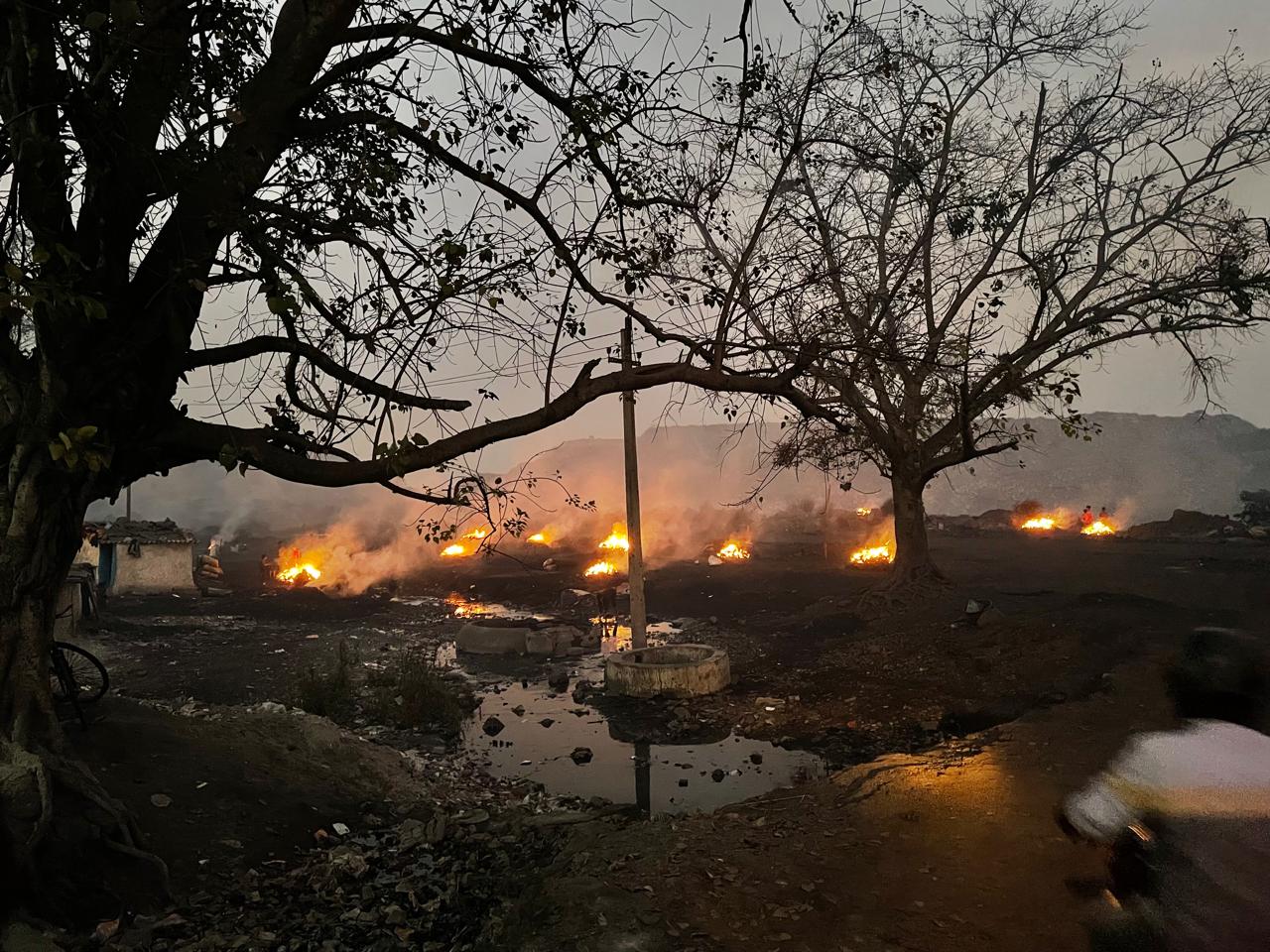
Dhanbad today exists as a city of striking simultaneity, where visible markers of economic ascent and deeply entrenched deprivation almost press against each other, demanding to be read together. On one side are the unmistakable signs of a city on the move: sprawling malls, newly built apartment complexes, fancy SUVs crowding widened roads, cafés, 10-minute-deliveries that signal aspiration, consumption, and confidence in an urban future. On the other hand are landscapes shaped by extraction and abandonment. Coal belts scarred by fire beneath the earth, and forest-edge tribal settlements where life continues at a distance from infrastructure, services, and opportunity.
It is this proximity, rather than remoteness, that makes Dhanbad’s inequities particularly unsettling.
As Team CauseBecause, visiting the region as an independent entity to observe and review the work of Nand Care Foundation, we were confronted not only with poverty in its material sense, but with a deeper question of how development is spatially distributed, socially allocated, and morally rationalised within a single geography.
Coal as an inherited condition
For the coal mine workers and informal labourers living along the mining belt, coal is an ambient condition that structures everyday life. In several settlements we visited, underground fires burning continuously for years have rendered the ground itself unstable. Cracks run along the walls of homes, the earth beneath feels warm, and yet daily life continues with an unsettling normalcy; danger has been absorbed into routine.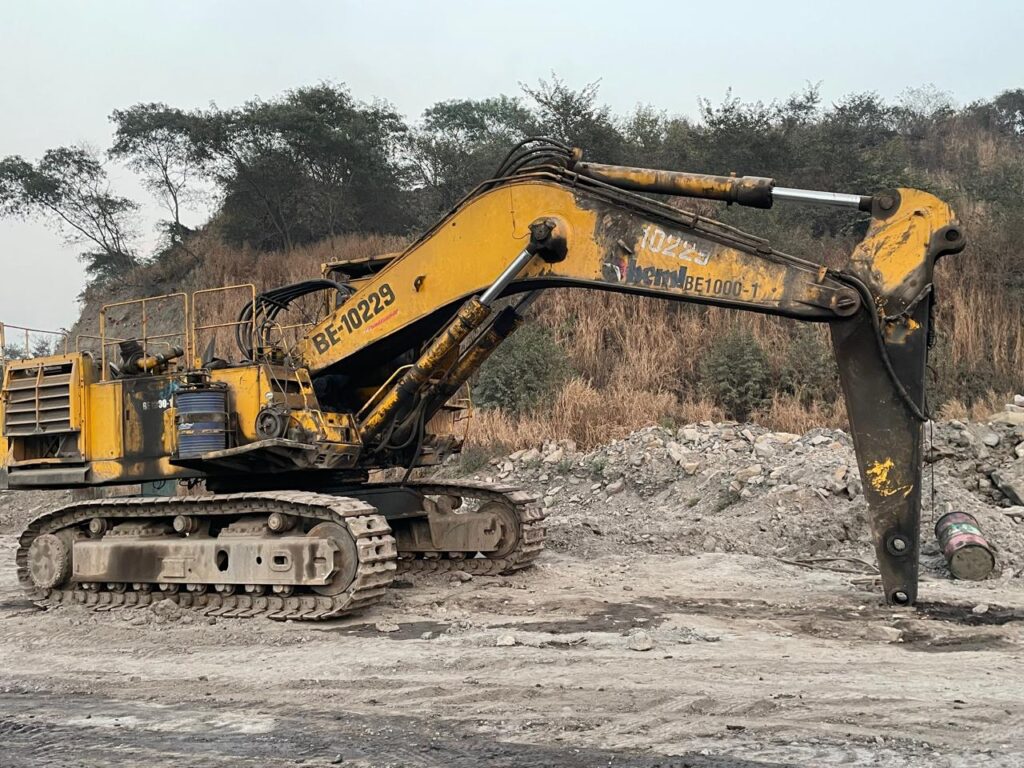
These are not transient settlements. Families have lived here for generations, raising children atop land that is literally eroding beneath them. Many households possess little beyond the barest essentials. For some, even clothing is limited to a couple of sets, washed, dried, and worn again without pause. This deprivation is a quiet, unremarked economy of survival.
Winter here becomes more than a season, it becomes a crucible. Damp air and insufficient shelter make cold a compounding force, exacerbating health vulnerabilities already heightened by years of exposure to dust and manual labour. In response, we witnessed Nand Care Foundation systematically distributing blankets, jackets, and warm clothing to thousands of individuals. The small intervention is critical mitigation against avoidable suffering.
Coal India’s relocation colonies, intended to move families away from active mining zones and underground fires, offer a sobering lesson in how rehabilitation can fail when stripped of social imagination. What we encountered were dense housing clusters that have, over time, taken on the characteristics of urban slums. Overcrowded units, failing sanitation systems, unreliable water supply, and a near-complete absence of community infrastructure.
While people were moved physically, livelihoods did not follow. Social networks fractured. The promise of safety did not translate into dignity. These colonies now exist in a state of suspended neglect, neither fully urban nor adequately supported, and increasingly disconnected from both employment and public services.
It is within these spaces that Nand Care Foundation’s role becomes visible in an understated but critical way. During the pandemic alone, the Foundation distributed ration kits to nearly 100,000 families, ensuring that even those without steady incomes had access to food at a time when markets shuttered and informal work ceased.
Hunger
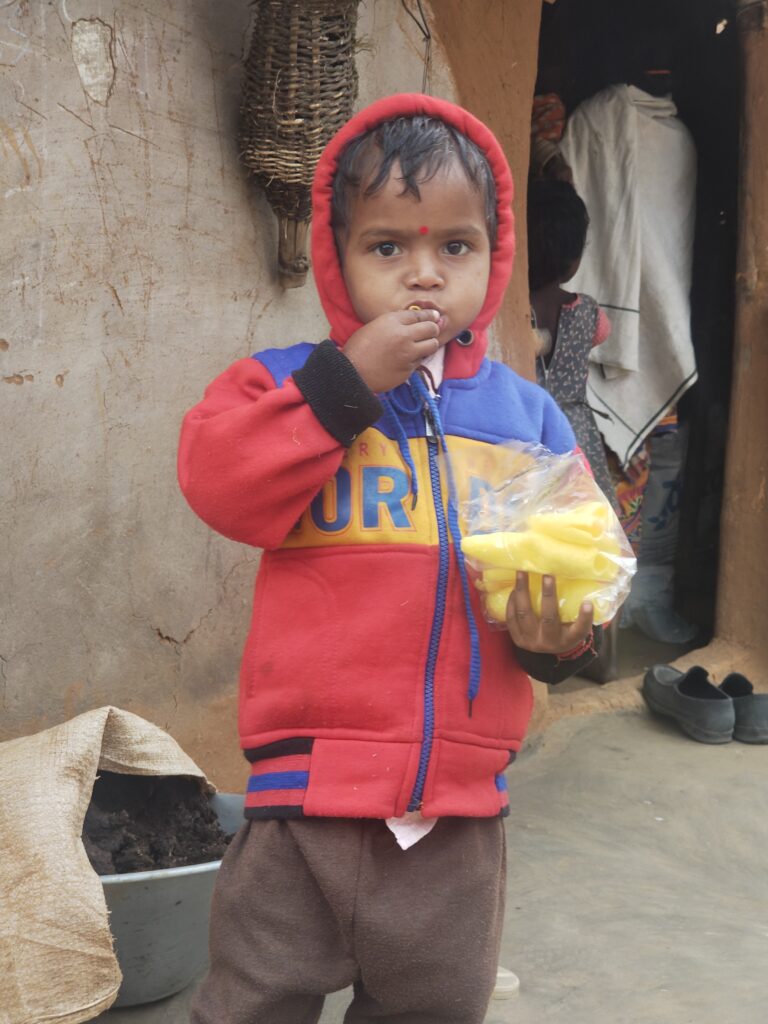 Food insecurity in areas we visited with the Foundation’s team manifests as a constant negotiation between quantity and nutrition, between today and tomorrow. Sometimes, children attend school without breakfast and adults stretch a single meal across an entire day.
Recognising this, the Foundation partnered with platforms such as Donatekart and Zomato Feeding India to run community kitchens and food distribution drives that offered more than calories; they introduced predictability into lives governed by uncertainty. For children of coal mine workers, warm meals at school were often the most nutritionally complete food they received in a day—a vital anchor that improved attendance, concentration, and learning.
In tribal settlements, nutrition and fruit distribution drives carried particular significance, reflecting an understanding that food security is not merely about caloric intake, but about sustaining health in contexts where access to markets, income stability, and healthcare is limited.
Distance as a daily tax on the poor
In the forest-adjacent tribal hamlets around Topchanchi, deprivation assumes a quieter, more dispersed form. The environment is greener, the air clearer, but opportunity lies far away. Men and women travel long distances each day for wage labour, often returning with uncertain earnings. Healthcare facilities are distant. Public transport is irregular. Every necessity demands movement.
Schools exist, but they function under severe constraints – limited infrastructure, overburdened teachers, and fragile continuity.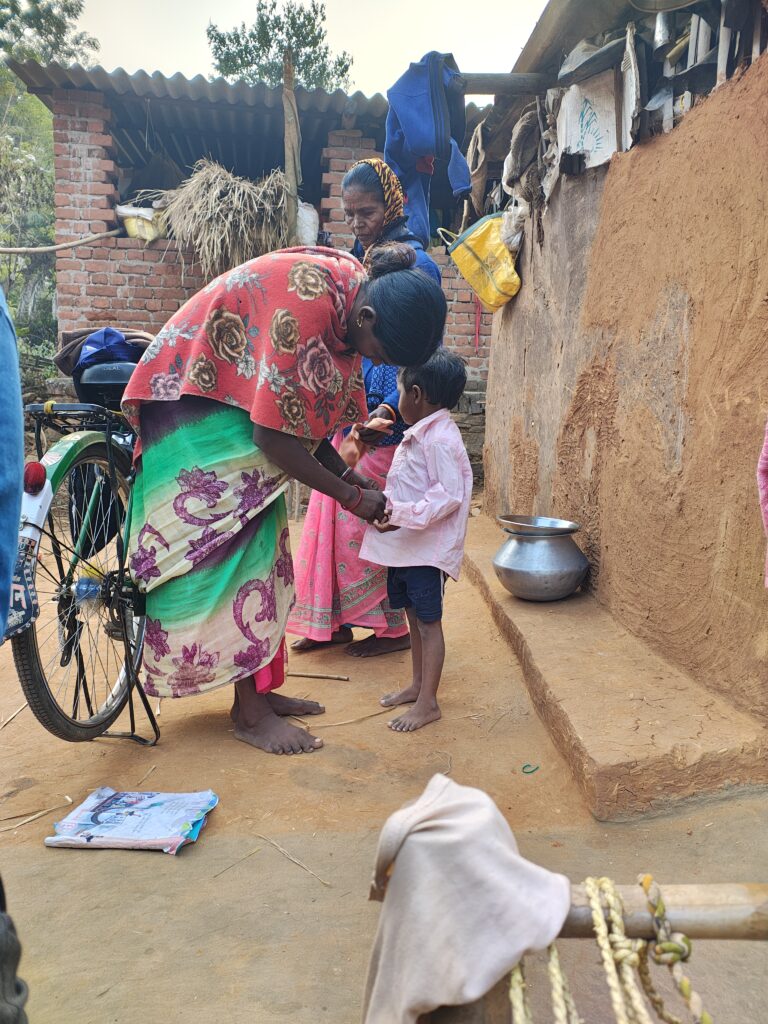
What left the deepest impression on us were the adolescent girls who walk nearly ten kilometres every day to attend high school. The journey is physically demanding and emotionally taxing, cutting into time for rest, study, and safety. Dropout, in such contexts, is not the result of disinterest but exhaustion by distance, insecurity, and the absence of nearby institutional support.
Nand Care Foundation’s educational support, particularly around after-schooling or remedial assistance and warm meals, functions as a slender but vital thread, holding aspiration in place against a steady pull towards withdrawal.
An organisation shaped by its terrain
Nand Care Foundation is deeply shaped by the geography and social realities of Dhanbad. Founded by Deepak Kumar, the organisation has grown alongside the communities it serves and its decision-making remains rooted in lived familiarity with place.
with continuous food and essentials support as well as sustained educational backing for children in some of the most underserved parts of the coal belt and tribal peripheries.
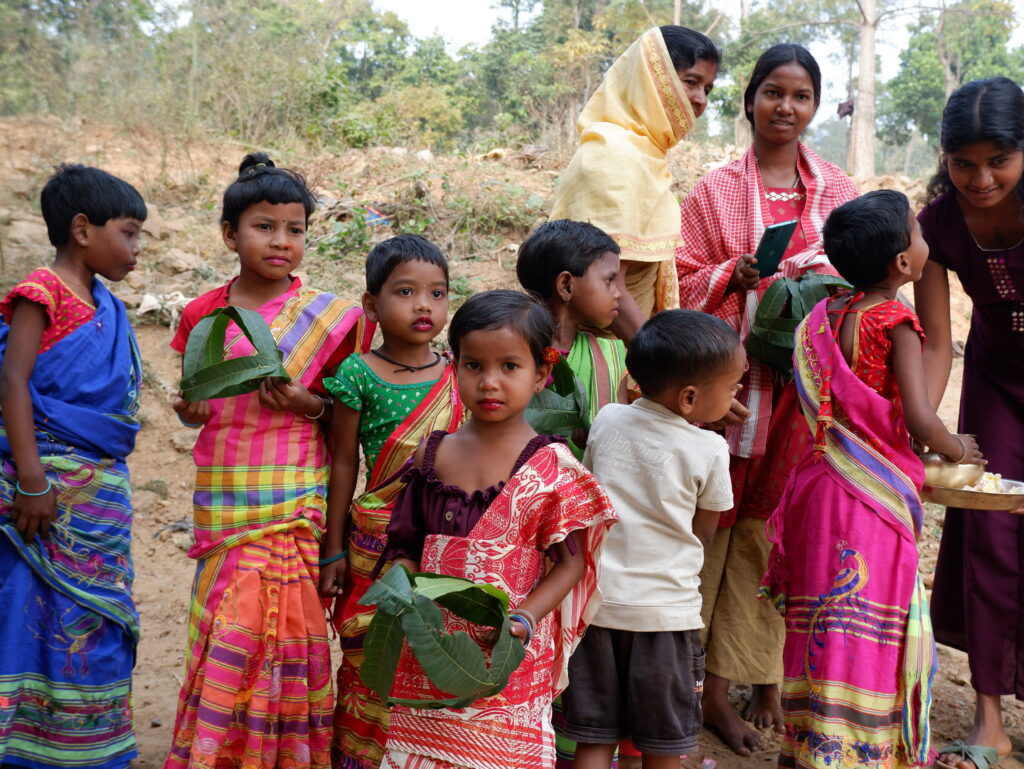
The Foundation’s reach is notable: it is serving more than 100,000 families in over 100 villages
The Foundation’s volunteers convey intimate knowledge of which families struggle quietly, which children
disappear from school during winter, and which settlements require sustained engagement long after public attention fades.
The work here resists the language of transformation and scale. Instead, it is defined by repetition, patience, and the refusal to disengage.
Reflections
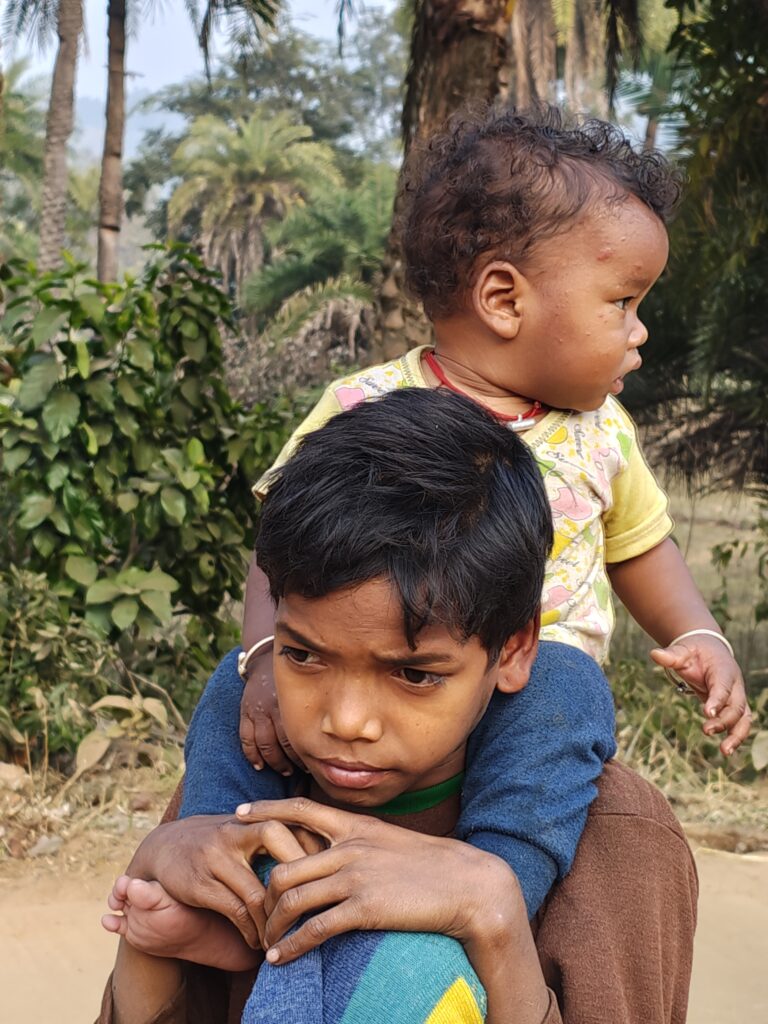
Dhanbad forces us to confront uncomfortable truths about development. It is a city where wealth and deprivation are not separated by distance but by perception; the benefits of extraction are visible in urban growth, while its costs are absorbed silently by those living closest to the mines and forests.
As independent observers, Team CauseBecause left with a heightened awareness of how inequality is normalised when it is spatially contained, and how easily entire populations are rendered peripheral to narratives of progress.
In such a landscape, organisations like Nand Care Foundation do not claim to resolve systemic injustice. What they do, instead, is hold space for dignity, for continuity, and for the possibility that lives lived on the margins remain worthy of care, attention, and remembrance.