How Jindal Foundation’s #HerKadam is Supporting Women, One Step at a Time
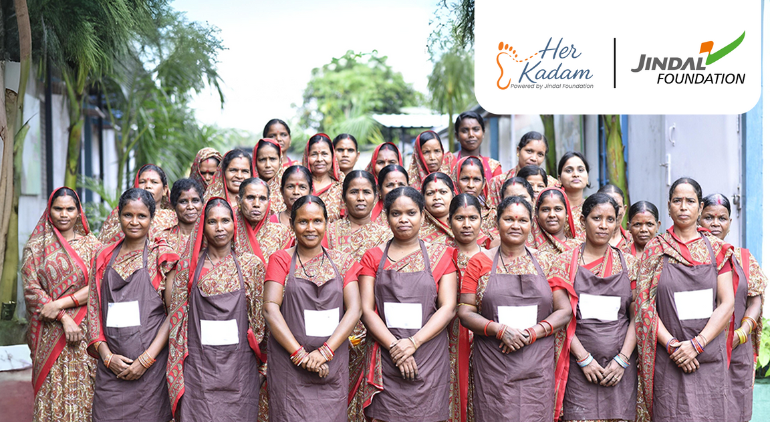
When we talk about women’s empowerment, it often sounds like a big idea. But on the ground, it usually begins with something much smaller a skill learned, a first income earned, or the confidence to make a decision. That is the space where #HerKadam, an initiative by the Jindal Foundation, is trying to work.
In a conversation with Rishi Pathania, Vice President and Head of CSR, it becomes clear that the campaign is not about launching something new. Instead, it brings together years of work already being done with women and girls across India work that has reached over 2.7 million people so far.
Moving from support to ownership
A key idea behind #HerKadam is simple programmes work better when women are not just included, but involved. As Pathania explains, many initiatives in the past have been designed for women, but not always with them. Over time, this can limit how relevant or sustainable they are.
With #HerKadam, the focus is on changing that by encouraging women to speak about their needs, take the lead in their communities, and support each other. The idea is to build something that lasts, not just something that looks good in reports.
Where change shows up first
Across its programmes, the Foundation works in areas like health, education, skills, livelihoods, and digital literacy. Among these, livelihoods and entrepreneurship tend to show the quickest visible change. When a woman starts earning, even a small amount, it often shifts how she is seen within her household and how she sees herself.
It can lead to greater confidence, a stronger voice in decision making, and a sense of independence that grows over time.
Starting early with girls
A significant part of the work also focuses on adolescent girls, a stage where many life choices begin to take shape. Through initiatives like Kishori Express, the Foundation works on menstrual health, nutrition, and awareness, helping girls stay in school and better understand their health.
At the same time, programmes like Vatsalya focus on maternal and child health, aiming to improve care for both mothers and children. These early interventions are meant to address challenges before they become harder to solve later.
Built on community trust
One thing that stands out is how much this work depends on local connections. Rather than following a one size fits all approach, the Foundation works closely with community leaders, grassroots organisations, and on ground partners who understand local realities.
This helps build trust, which is often the most important factor in whether people continue to engage with a programme over time.
Beyond the numbers
While the numbers are significant, the campaign itself focuses more on everyday stories than big claims. The idea behind #HerKadam is to highlight small, consistent progress a woman learning a new skill, a girl continuing her education, or someone taking a first step towards financial independence.
These moments may seem small on their own, but together they create a much larger impact across families and communities.
Measuring real change
Measuring this impact goes beyond just numbers. The Foundation tracks changes in income, savings, and employment, but also looks at confidence, decision making, and overall wellbeing.
Because in the end, empowerment is not only about earning more, but about having the ability to make choices and shape one’s own life.
When women become leaders
Over time, many women who begin as participants go on to support others. They share what they have learned, guide their peers, and slowly become leaders in their communities.
This is where the real change begins to take root when the programme is no longer the driving force, and people start carrying the progress forward themselves.
A step at a time
At its core, #HerKadam is built on a simple idea progress does not always come in big leaps. Sometimes it is a series of small, steady steps, and when enough women take those steps together, the impact extends far beyond individuals and into entire communities.