How Effective Are Waste Management Policies in Reducing Environmental Pollution?

1. Introduction
Rapid urbanisation, population growth, and changing modes of consumption have created a significant rise in the quantity and complexity of waste produced around the world. Municipal solid waste generation alone is expected to grow starkly over the next several decades, especially in developing and emerging economies where city infrastructure and governance systems struggle to keep pace with growth (United Nations Environment Programme [UNEP], 2023). Improper waste management has become a major environmental challenge, directly causing pollution of air, water, and soil, while aggravating climate change and public health risks. As a result, waste management has moved beyond a technical or municipal concern and is now widely accepted as a key element of environmental policy and sustainable development strategy.
Environmental pollution linked to poor waste management appears in many forms. Open dumping and uncontrolled landfilling produce leachate that poisons ground and surface water, while the burning of waste — especially plastics and organic material — contributes significantly to air pollution and greenhouse gas emissions (UNEP, 2023). Methane from landfills is a major source of short-lived climate pollutants, intensifying global warming and degrading local air quality. In many low- and middle-income countries, informal waste handling worsens these impacts through exposure to toxic substances, particularly for vulnerable populations. These linkages illustrate why developed waste management systems are essential for reducing environmental pollution.
In response, governments worldwide have enacted a broad array of waste management policies — regulatory controls, economic incentives, recycling requirements, landfill restrictions, and broader frameworks of extended producer responsibility. International organisations such as UNEP have emphasized integrated waste management as a critical tool for tackling pollution, improving community health, and meeting the Sustainable Development Goals (UNEP, 2023). Sustainability-oriented advocacy organizations similarly stress that waste prevention, segregation, recycling, and recovery are essential to minimizing the environmental footprint of modern consumption patterns (Green Earth, n.d.).
Despite the proliferation of such policies, their effectiveness in reducing pollution is uneven and highly context-specific. Some countries have made significant progress in reducing landfill use, air pollution, and marine debris through stringent enforcement and technological innovation, while others continue to struggle with persistent implementation gaps. Poor infrastructure, weak institutional capacity, limited public participation, and financial constraints frequently compromise policy outcomes — especially in developing economies. Waste policymaking also increasingly intersects with the broader circular economy agenda, which emphasizes resource efficiency, waste minimization, and material reuse (Kotyal, 2023), raising the question of whether current policies are adequate or whether more systemic change is needed.
Given these complexities, a thorough evaluation of waste management policy impact is needed. Much existing literature focuses either on technical treatment solutions or isolated case studies, making it difficult to draw broader conclusions about policy performance across regions and governance settings. Secondary studies — systematic reviews, policy assessments, and comparisons — help reveal recurring patterns, success factors, and persistent problems in waste governance.
Accordingly, this paper examines the effectiveness of waste management policies in reducing environmental pollution through a structured review of secondary literature, exploring the role of different policy instruments, drawing on empirical evidence from global and regional case studies, and identifying key challenges and opportunities in policy enforcement.
2. Conceptual Framework and Definitions
2.1 Waste and Waste Management
Waste is defined as material disposed of once it is no longer deemed useful or valuable by its owner. It includes municipal solid waste, industrial waste, hazardous waste, e-waste, and organic waste — each posing different environmental risks when not properly managed. Municipal solid waste, comprising household refuse, packaging, food waste, and other daily discards, forms a significant part of urban pollution problems owing to its high volume and diverse composition (UNEP, 2023).
Waste management encompasses the collection, transportation, treatment, recycling, recovery, and final disposal of waste materials. Effective systems must aim not only to safely dispose of waste but also to minimize its generation and recover valuable resources. Sustainability-focused frameworks increasingly treat waste management as a lifecycle approach — beginning with prevention and continuing through reuse and recycling — rather than a linear, disposal-based model (Green Earth, n.d.).
2.2 Environmental Pollution and Waste-Related Externalities
Environmental pollution is the release of harmful substances and energy into air, water, and soil, with negative effects on ecosystems, human health, and economic activity. Waste mismanagement contributes to pollution in multiple ways: open dumping and poorly designed landfills release toxic leachate into soil and waterways, while uncontrolled burning releases particulate matter, dioxins, and other hazardous pollutants into the atmosphere (UNEP, 2023). The breakdown of organic waste in landfills also generates methane, a potent greenhouse gas.
Economically, pollution from waste mismanagement represents a negative externality — the social costs of environmental damage exceed the private costs borne by waste producers. Waste management policies aim to internalize these externalities through regulation, pricing, or behavioural incentives, with success depending on their ability to change how waste is generated and disposed of.
2.3 Waste Management Policies and Policy Instruments
Waste management policies are legal, economic, and institutional measures used to regulate waste-related activity. They fall broadly into three categories: command-and-control instruments (e.g., landfill bans, segregation mandates, emission standards), market-based instruments (e.g., landfill taxes, pay-as-you-throw schemes, recycling incentives), and informational or voluntary instruments (e.g., public awareness campaigns, behavioural nudges).
Extended Producer Responsibility (EPR) policies represent a major advancement, shifting oversight of post-consumer waste from municipalities to producers. By making manufacturers responsible for collection and recycling, EPR policies aim to encourage eco-design and reduce waste generation at the source. Empirical research shows measurable improvements in recycling rates and reduced landfill dependence under EPR, though outcomes vary across regulatory environments (Kotyal, 2023).
2.4 Circular Economy as an Analytical Lens
The circular economy offers a broader framework for evaluating waste policy. In contrast to the traditional linear “take-make-dispose” model, it prioritizes waste prevention, material reuse, recycling, and recovery — redefining waste as a potential resource rather than an inevitable by-product of economic activity. Policies grounded in circular economy principles aim to reduce dependence on virgin materials and lower pollution across the production-consumption cycle (Kotyal, 2023). Their success, however, depends on supporting infrastructure, market demand for recycled material, and cross-sector institutional coordination.
2.5 Framework for Measuring Policy Effectiveness
In this study, policy effectiveness refers to the degree to which waste management policies achieve their intended environmental impacts — particularly reductions in air, water, and soil pollution — encompassing both direct outcomes (e.g., reduced emissions from treatment facilities) and indirect outcomes (e.g., behavioural shifts in segregation and consumption). Secondary studies typically measure effectiveness through indicators such as recycling rates, landfill diversion ratios, and emission reductions.
The conceptual framework adopted here connects waste management policy to pollution outcomes through three channels: regulatory enforcement, economic incentives, and behaviour change — all mediated by external factors such as income levels, urbanization, and institutional capacity.
3. Overview of Waste Management Policies Globally
3.1 Development of Waste Management Policies
Early waste policies focused primarily on sanitation and public health, aiming to remove waste from urban areas to prevent disease. Disposal-oriented approaches — open dumping and open landfills — dominated policy responses for much of the twentieth century. As industrialization and consumerism expanded, these approaches proved inadequate against the growing environmental impact of waste: water contamination, air pollution, and land degradation (UNEP, 2023).
From the late twentieth century onward, waste policy increasingly incorporated environmental protection — regulating landfill design, restricting open burning, and governing hazardous waste handling. More recently, concern over climate change has drawn attention to landfill methane emissions, reinforcing the role of waste policy in reducing greenhouse gas emissions and improving air quality.
3.2 Types of Waste Management Policy Instruments
Command-and-control instruments remain central to waste governance, including bans on open dumping, mandatory source segregation, emission standards for incineration plants, and restrictions on landfilling certain materials (e.g., plastics, organics).
Market-based instruments — landfill taxes, pay-as-you-throw schemes, and deposit-refund systems — aim to internalize the environmental cost of disposal and incentivize reduction and recycling. Evidence suggests these instruments can meaningfully shift household and firm behaviour when well designed and enforced, with price levels and compliance as key determinants of success (OECD, 2022).
Informational and voluntary instruments — public education campaigns, eco-labeling, and voluntary recycling programs — complement regulatory and economic measures, though their impact depends heavily on social norms, institutional trust, and supporting infrastructure.
3.3 International and Regional Policy Frameworks
Internationally, waste management is embedded within broader environmental and development agendas. The United Nations has emphasized waste reduction and environmentally sound management as part of the Sustainable Development Goals — particularly those relating to sustainable cities, responsible consumption and production, and climate action (UNEP, 2023).
Regionally, the European Union’s waste hierarchy prioritizes prevention, then reuse, recycling, recovery, and disposal as a last resort. EU directives setting landfill and recycling targets have driven significant reductions in landfill use and improvements in material recovery among member states. By contrast, many developing regions remain heavily reliant on landfilling and informal waste management, both financially and institutionally.
3.4 Waste Management Policies in Developing and Emerging Economies
Low- and middle-income countries face distinct challenges tied to rapid urbanization, underdeveloped infrastructure, and informality. Even where policy frameworks exist on paper, large implementation gaps persist. Informal waste pickers play a vital role in material recovery, but because they typically operate outside formal systems, policy coverage often fails to reach them (World Bank, 2018).
Governments in emerging economies are increasingly reforming policy to improve waste sorting, expand recycling capacity, and reduce open dumping — but weak enforcement capacity, limited funding, and low public awareness continue to undermine outcomes, making it difficult to translate policy goals into measurable pollution reductions.
3.5 Integration of Circular Economy Principles into Policy Design
An increasing number of waste policies are shaped by circular economy principles that aim to decouple economic growth from waste generation — through extended producer responsibility, material recovery, and waste-to-resource initiatives. These approaches emphasize systemic waste reduction over end-of-pipe solutions, targeting reduced landfill dependency, lower treatment emissions, and less pressure on natural resources (Kotyal, 2023). Aligning circular economy aspirations with existing waste systems, however, requires substantial institutional coordination and long-term investment that varies widely by country.
4. Linkages Between Waste Management and Environmental Pollution
4.1 Measurement of Waste Creation and Increase
Global waste production is rising sharply with urbanization, income growth, and changing consumption patterns. In 2020, global municipal solid waste (MSW) generation was estimated at around 2.01 billion tonnes annually, projected to reach 3.78 billion tonnes by 2050 under a business-as-usual scenario — nearly 90% higher than three decades prior (World Bank, 2024; UNEP, 2024). At least 33% of this waste is currently mismanaged through open dumping or burning, causing direct pollution (World Bank, 2024). Per capita generation varies enormously by region, with OECD countries averaging around 552 kg per year — far higher than many developing regions. 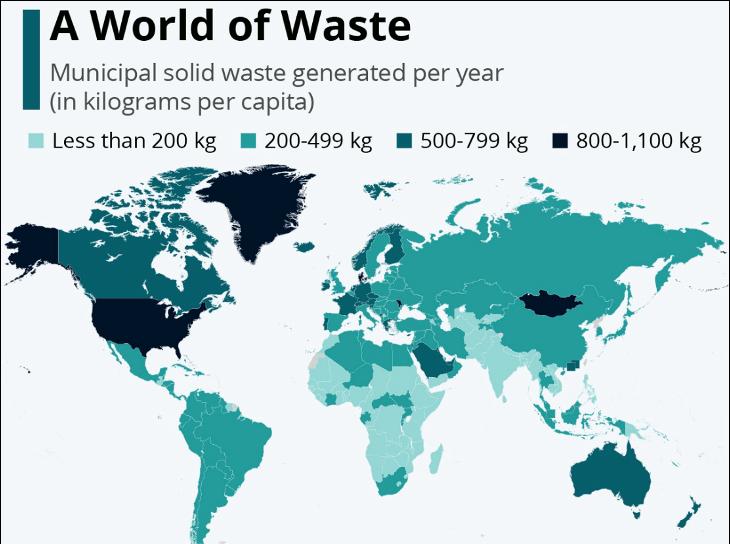
4.2 Waste and Air Pollution: Methane and Greenhouse Gas Emissions
Waste management systems strongly affect air quality through greenhouse gas and pollutant emissions. Organic waste decomposing in landfills generates methane (CH?), a greenhouse gas with roughly 28–36 times the global warming potential of CO? over a 100-year period (IPCC, as cited in Kumar et al., 2018). Waste decomposition is estimated to account for about 5% of global GHG emissions annually (UNEP, 2024).
In the United States alone, landfills accounted for more than 17% of anthropogenic methane emissions in 2022 (roughly 270 Mt CO?-equivalent), or about 1.9% of total US GHG emissions (Center for Sustainable Systems, 2024). Waste-to-energy incineration reduces landfill volumes but still generates CO? and local air pollutants — particulates, dioxins, and heavy metals — linked to respiratory and cardiovascular illness in exposed populations (Center for Sustainable Systems, 2024).
4.3 Water Pollution: Leachate and Marine Plastic Accumulation
Mismanaged waste is a significant source of water pollution. Leachate from open dumps and poorly engineered landfills can contaminate both surface and groundwater; regional studies consistently show elevated levels of contaminants such as total dissolved solids, nitrates, and sulphates near disposal sites exceeding drinking water standards — as documented in a 2016 study from Visakhapatnam. Separately, at least 8 million tonnes of plastic waste enter the oceans every year, primarily from land-based, mismanaged sources, contributing to persistent marine pollution and long-term ecosystem threats (World Bank, 2018). 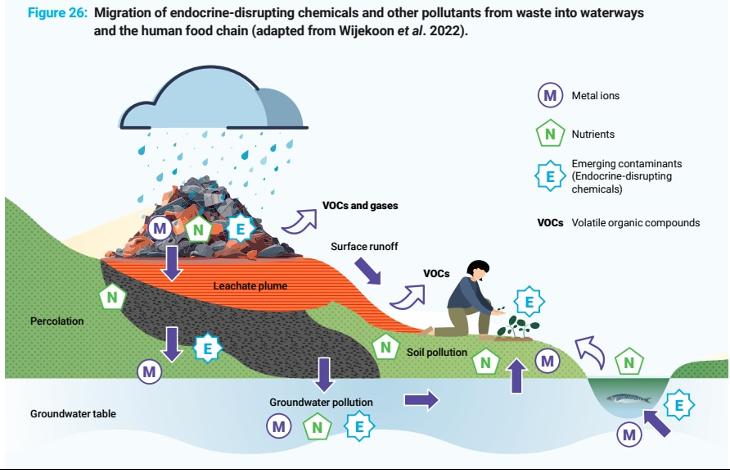
4.4 Contamination of Soil and Land Degradation
Soil contamination occurs as toxic substances from improperly disposed waste — including heavy metals and persistent organic pollutants (POPs) — degrade in soil and disturb biological activity. Global data on waste-related soil contamination are limited, but regional studies consistently show high pollutant concentrations near dumpsites; for example, water quality tests near waste disposal areas in India showed levels exceeding national drinking water standards, indicative of serious soil and subsurface contamination affecting crop production and human health.
4.5 Public Health Impacts
Linking waste-related pollution to health burdens underscores the stakes of poor waste management. Air pollution from waste burning and landfill emissions can push urban particulate matter levels far above safe thresholds. While disease-burden estimates specific to waste-related pollution are still emerging, air pollution overall is linked to more than 6 million premature deaths worldwide annually, with waste-related open burning a major contributor in urban areas with high burning rates.
4.6 The Role of Waste Management Policy in Pollution Mitigation
Effective policies reduce pollution by lowering the volume of waste sent to landfills and open dumps, improving segregation, and promoting recycling and recovery. OECD countries, for example, moved landfill’s share of MSW from about 53% in 2010 to roughly 40% by 2023, reducing associated emissions (OECD, 2025). Countries with stronger regulatory frameworks and enforcement consistently show better environmental indicators than regions with low collection coverage and high uncontrolled disposal.
5. Effectiveness of Waste Management Policies: Lessons from Secondary Studies
5.1 Global Studies
Across the world, well-designed and well-enforced waste management policies are a major factor in reducing environmental pollution. Countries with strong formal collection service — 90% or more of waste collected — see major decreases in open dumping and burning, with corresponding improvements in air and water quality indicators (World Bank, 2024). Conversely, areas with collection coverage below 50% account for nearly three-quarters of the world’s mismanaged waste, underscoring the need for infrastructure investment alongside policy.
Policy-based landfill diversion strategies — recycling mandates, restrictions on organics — can achieve significant shifts (20–50% reductions) within a decade of adoption (Kaza et al., 2018). Since organic waste is a major driver of landfill gas emissions, UNEP (2024) estimates that diverting organics through composting and anaerobic digestion could cut methane emissions by up to 40% in urban areas with high organic waste content.
Economic instruments show measurable effects too: across OECD countries, a 10% increase in landfill fees is associated with an average 3–6% decrease in landfill disposal and corresponding increases in recycling and recovery (OECD, 2022) — evidence that pricing waste disposal can help internalize environmental costs and shift behaviour.
5.2 Evidence from Policy Case Studies
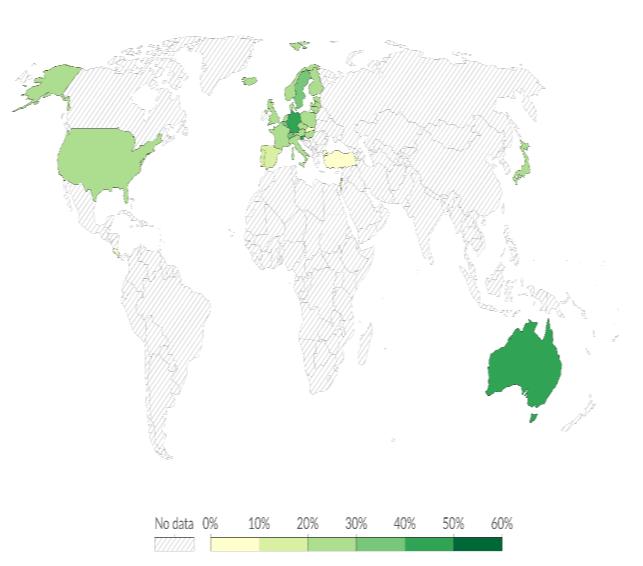
National and city-level case studies offer deeper insight. EU landfill directives and recycling standards drove a sharp decline in landfill dependence: between 1995 and 2022, the share of municipal waste landfilled in the EU fell from about 68% to below 23%, while recycling rose from 25% to over 48% (Eurostat, 2023), with associated reductions in landfill emissions and improved groundwater protection.
In China, a policy evaluation of Beijing’s municipal solid waste classification reform found that waste sent to landfills fell 14–18% in the first two years, alongside increased recycling and incineration efficiency and reduced uncontrolled disposal, improving urban air quality indicators (Zhang et al., 2024).
Australia’s landfill levies and national waste reduction targets drove a 16% improvement in material recovery rates between 2010 and 2020, with landfill disposal declining despite population growth (OECD, 2022), lowering pressure on landfills and associated emissions. 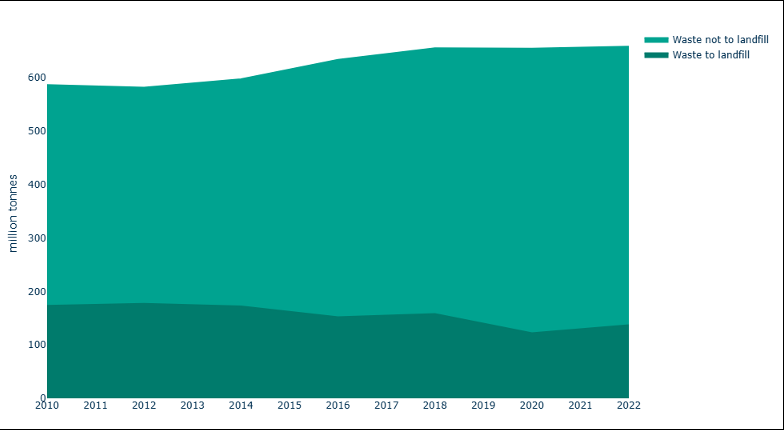
5.3 Extended Producer Responsibility and Pollution Reduction
EPR policies have been widely assessed, particularly for packaging, electronic waste, and plastics. European countries with well-established EPR systems report packaging recycling rates above 65%, compared with less than 30% in countries without such policies (OECD, 2022), alongside reduced illegal dumping and improved collection coverage. For e-waste, EPR-driven collection systems in high-income countries capture 45–60% of generated e-waste, reducing releases of hazardous substances such as lead and mercury into soil and water (UNEP, 2024) — though enforcement gaps and informal recycling continue to limit effectiveness in emerging economies.
5.4 Comparison of Performance by Income Group
Cross-regional comparisons reveal large gaps tied to income and institutional capacity. In wealthy countries, municipal waste collection often exceeds 95%, with over 85% of collected waste safely managed through controlled landfills, recycling, or energy recovery (World Bank, 2024), keeping pollution from open dumping and burning minimal. In poorer countries, by contrast, only about 39% of waste is collected, and nearly 93% of collected waste ends up in open dumps or uncontrolled landfills (World Bank, 2024) — with weak enforcement, limited finance, and inadequate infrastructure consistently undermining policy outcomes even where formal regulations exist.
5.5 Synthesis of Evidence
The empirical literature shows that waste management policies can meaningfully reduce environmental pollution — measurable in reduced landfill use, methane emissions, open burning, and plastic leakage. Regulatory standards, economic instruments, and producer responsibility schemes work best as part of an integrated system. But policy design alone is not enough: enforcement capacity, infrastructure investment, and public compliance remain decisive.
6. Challenges in Implementation of Waste Management Policy
6.1 Infrastructure and Capacity Constraints
Inadequate infrastructure is one of the biggest barriers to effective policy. Globally, about 2.7 billion people lack access to regular waste collection, resorting to open dumping and burning (World Bank, 2024). Collection coverage is just 39% in low-income countries versus over 95% in high-income countries, and even where collection exists, treatment infrastructure — sanitary landfills, composting, recycling facilities — often cannot handle waste volumes safely. Recycling requirements or landfill bans fail where alternative treatment facilities don’t exist, with waste meant for recycling frequently ending up in open dumps (UNEP, 2024).
6.2 Weak Enforcement and Governance Issues
Enforcement remains a persistent challenge, especially in developing and emerging economies, due to limited administrative capacity, funding shortfalls, and unclear institutional responsibility. The World Bank (2024) estimates that in low-income countries, nearly 70% of waste management budgets go to collection alone, leaving little for monitoring and enforcement. Corruption and non-compliance further weaken policy — illegal dumping often continues even where landfill use is restricted and disposal fees apply, because enforcement bodies lack the resources to act.
6.3 Financial Constraints and Cost Recovery Issues
Waste management is capital-intensive, and financial limitations are a major obstacle. The World Bank (2018) notes that waste management can consume 20–50% of municipal budgets in low-income countries even as service levels remain low. Cost recovery through user fees is often politically sensitive, leading to chronic underpricing and underinvestment. Where informal, unmonitored disposal remains cheaper, economic instruments like landfill taxes lose effectiveness, and inadequately enforced disposal costs can push citizens toward illegal dumping and burning (OECD, 2022).
6.4 Behavioural and Social Barriers
Source segregation and recycling policies depend on public participation, but compliance is often lower than expected — in many areas, less than 50% of household waste is segregated at the source despite legislation. Poor compliance stems from low awareness, inconvenience, and mistrust — some households abandon segregation efforts believing waste is later commingled during transport or disposal, which undermines policy credibility and environmental returns.
6.5 Waste Systems, Informality, and Inequality
Informal waste collectors play a major role in material recovery, particularly in developing countries — the World Bank (2018) estimates 1.5–2 billion people globally rely on informal waste collection for their livelihood. Because informal systems often sit outside regulatory reach, new policies can inadvertently exclude these workers, exacerbating social inequity and reducing effectiveness, while unsafe informal recycling practices create localized pollution and health hazards.
6.6 Technological and Market Limitations
Technological and market constraints also limit outcomes. Volatile markets for recycled commodities can undercut recycling targets — global disruption following restrictions on waste imports, for instance, led to stockpiling and increased landfilling in several countries despite strong recycling policies (OECD, 2022). Waste-to-energy technologies reduce landfill volumes but carry high costs and, without strict emission controls, can shift pollution from land and water to air rather than reducing it.
7. Policy Innovations and New Approaches in Waste Management
7.1 Circular Economy–Based Policy Reforms
Circular economy principles are increasingly central to waste policy innovation, emphasizing prevention, reuse, and recycling to cut pollution at the source. UNEP (2024) estimates that circular economy interventions in the waste sector, combined with energy and industrial policy reforms, could cut global greenhouse gas emissions by roughly 20%. In the EU, circular economy action plans have driven municipal recycling rates from around 37% in 2008 to over 48% by 2022 (Eurostat, 2023), reducing landfill use and associated methane emissions.
7.2 Strengthening Extended Producer Responsibility
Enhanced EPR schemes increasingly include mandatory collection targets, eco-modulated fees, and greater transparency. Countries with developed EPR systems recover 60–75% of packaging waste, compared with less than 30% where no EPR policy exists (OECD, 2022). Newer approaches link EPR to circular economy goals by incentivizing product redesign — secondary studies suggest eco-design obligations under EPR can reduce material use by 10–15% per product cycle (OECD, 2022).
7.3 Digitalization and Smart Waste Management
Smart bins, GPS-enabled collection vehicles, and data monitoring systems help municipalities optimize collection routes, cut fuel use, and improve service coverage — case studies suggest smart systems can cut collection costs by 10–30% while reducing transport-related emissions (World Bank, 2024). Digital tracing systems also improve transparency in waste streams, supporting enforcement of landfill bans and recycling requirements.
7.4 Inclusion of the Informal Sector in Formal Policy Frameworks
A growing number of policies now integrate informal waste workers into formal systems through cooperatives, training, and social protection. Urban case studies show recycling rates rising 20–40% alongside safer handling practices when informal workers are formally integrated (World Bank, 2018) — an approach that improves both environmental outcomes and policy legitimacy, given how much material recovery in developing countries is carried out informally.
7.5 Financing Mechanisms and International Cooperation
Innovative financing — blended finance, green bonds, and international climate funds — is expanding investment in waste infrastructure. UNEP (2024) estimates the potential to mobilize over USD 100 billion annually in international finance for waste and circular economy initiatives, particularly to expand treatment capacity and pollution control in low-income regions. International cooperation also supports knowledge transfer and regional harmonization of standards to address transboundary waste pollution.
8. Policy Implications and Recommendations
8.1 Improving Policy Design Through Integrated Approaches
No single policy instrument can address the multidimensional nature of waste-related pollution. Systems that combine regulation, economic incentives, and behaviour-focused initiatives consistently outperform single-instrument approaches (OECD, 2022; UNEP, 2024). Waste policy should also be integrated with climate, public health, and urban development policy — given that the waste sector contributes roughly 5% of global greenhouse gas emissions, embedding it in national climate action plans could meaningfully support emission targets (UNEP, 2024).
8.2 Enhancing Infrastructure and Treatment Capacity
Countries with waste collection coverage above 90% and access to controlled disposal or recovery facilities show substantially lower pollution levels (World Bank, 2024), making expanded collection services and investment in sanitary landfills, composting, and recycling plants a policy priority. In regions with high organic waste content, diverting biodegradable waste to composting or anaerobic digestion could cut methane emissions from the waste sector by up to 40% (UNEP, 2024).
8.3 Enhancing Enforcement and Institutional Coordination
Stronger institutional directives, monitoring mechanisms, and dedicated enforcement budgets are essential. Digital tools such as waste tracking systems and performance dashboards can improve transparency and deter illegal dumping, particularly in urban areas (World Bank, 2024). Better coordination across municipal, regional, and national authorities can also reduce policy duplication and close implementation gaps.
8.4 Expanding the Role of Economic Instruments
Landfill taxes, pay-as-you-throw schemes, and deposit-refund systems remain effective tools for internalizing environmental costs — OECD evidence shows 3–6% reductions in landfill disposal for every 10% increase in disposal cost. Governments should calibrate these instruments carefully to remain socially equitable and pair them with affordable disposal alternatives. Expanding and strengthening EPR — with data transparency, collection targets, and eco-design incentives — can further improve packaging recycling rates, which exceed 65% under well-designed EPR systems (OECD, 2022).
8.5 Promoting Behavioural Change and Public Participation
With source-segregation compliance below 50% in many parts of the world, continued investment in education campaigns, community engagement, and feedback mechanisms is needed to build trust and drive behaviour change. Formally including informal waste collectors in disposal systems is another key opportunity — integration has been linked to a 20–40% boost in recycling rates and safer handling practices (World Bank, 2018), improving both environmental and social outcomes.
8.6 Harnessing Innovation and International Cooperation
Continued investment in smart waste management technology and public-private partnerships can cut collection costs by 10–30% while reducing transport emissions and improving service reliability (World Bank, 2024). At the international level, coordinated financing — potentially mobilizing USD 100 billion annually according to UNEP (2024) — will be essential for addressing transboundary waste flows and capacity gaps in low- and middle-income countries.
References
- Kaza, S., Yao, L., Bhada-Tata, P., & Van Woerden, F. (2018). What a waste 2.0: A global snapshot of solid waste management to 2050. World Bank. openknowledge.worldbank.org/handle/10986/30317
- United Nations Environment Programme. (2024). Global waste management outlook 2024. unep.org/resources/global-waste-management-outlook-2024
- World Bank. (2024). What a waste global database. datatopics.worldbank.org/what-a-waste
- Organisation for Economic Co-operation and Development. (2022). Global plastics outlook: Economic drivers, environmental impacts and policy options. OECD Publishing. doi.org/10.1787/de747aef-en
- Wilson, D. C., Rodic, L., Cowing, M., Whiteman, A. D., Stabile, A., Velis, C., Che, N., & Viliani, N. (2015). ‘Wasteaware’ benchmark indicators for integrated sustainable waste management in cities. Waste Management, 35, 329–340. doi.org/10.1016/j.wasman.2014.10.019
- Organisation for Economic Co-operation and Development. (2019). Waste management and the circular economy in selected OECD countries: Evidence from policy assessments (OECD Environmental Policy Papers, No. 13). OECD Publishing.
- World Bank. (2018). The changing face of solid waste management worldwide. openknowledge.worldbank.org
- European Environment Agency. (2023). Diversion of waste from landfill in Europe. eea.europa.eu
- Ergashevich, S. E. (2024). Reducing pollution with optimal waste recycling. Procedia: Economics, Social and Environmental Management, 3(3), 1–10.
- Kotyal, M. (2023). Circular economy approaches in urban waste policy: Evidence from India. Open access repository.
- Organisation for Economic Co-operation and Development. (2024). Extended producer responsibility: Basic facts and key principles. OECD Publishing.
- Wilson, D. C., Velis, C. A., Rodic, L., & Cowing, M. (2013). Integrated sustainable waste management in developing countries. Proceedings of the Institution of Civil Engineers – Waste and Resource Management, 166(2), 52–68.
- Eurostat. (2023). Municipal waste statistics. ec.europa.eu/eurostat
- Zhang, D., Huang, G., Yin, X., & Gong, Q. (2024). Evaluating waste classification policies: Evidence from Chinese cities. Waste Management. doi.org/10.1016/j.wasman.2023
- Our World in Data. (2025). Municipal waste recycling rates by country. ourworldindata.org/grapher/municipal-waste-recycling-rate
- Center for Sustainable Systems. (2024). US waste factsheet. University of Michigan.
- United Nations Environment Programme. (2023). Waste management and circular economy. unep.org
- European Sustainable Waste-to-Energy. (2025). Waste-to-energy and methane emissions reduction. eswet.eu
- RMI. (2025). Managing methane in the waste sector. rmi.org
- World Bank. (2025). Clean cities, bright futures: Solid waste reforms. projects.worldbank.org
- Cheung, K. K., et al. (2022). Comprehensive review of waste management policies. PMC, PMC9432801. pmc.ncbi.nlm.nih.gov/articles/PMC9432801
- Green Earth Organization. (n.d.). Strategies for sustainable waste reduction. greenearth.org
- Statista. (2022). Global municipal solid waste generation per capita. statista.com/chart/18732/waste-generated-country
- Dias, S. M. (2016). Informal waste pickers in circular economy policies. Habitat International.
- Kunwar, A., et al. (2023). Global plastic waste recycling and EPR laws. PubMed, 37832296. pubmed.ncbi.nlm.nih.gov/37832296
- OECD. (2022). Economic instruments for waste policy.

Siyona Munjal is a youth sustainability advocate and Captain of the Young Earth Heroes (YEH) Community, a movement curated by CauseBecause. A fourth-generation member of the Munjal family, she champions responsible consumption, climate action and community-led environmental initiatives. She is also an advocate of the Government of India’s LiFE movement and has worked on initiatives promoting composting, waste management and climate resilience.