Future Trends in CSR – The Next 10 Years
Looking to the future, what is needed – and what is just starting
to emerge – is a new approach to CSR, which I call Systemic CSR, or CSR 2.0.
This is a purpose-driven, principle-based approach, in which business seeks to
identify and tackle the root causes of our present unsustainability and
irresponsibility, typically through innovating business models, revolutionizing
their processes, products and services and lobbying for progressive national and
international policies. This leads to my first forecast.
Trend 1 – In the future, we will see most large, international companies having moved through the first four types or stages of CSR (defensive, charitable, promotional and strategic) and practicing, to varying degrees, Systemic CSR, or CSR 2.0. But what will CSR 2.0 look like? How will we know it when we see it? The first test is Creativity. The problem with the current obsession with CSR codes and standards (including the new ISO 26000 standard) is that it encourages a tick-box approach to CSR. But our social and environmental problems are complex and intractable. They need creative solutions, like Freeplay’s battery-free offgrid wind-up technologies (torches, radios, computers, etc.) or Vodafone’s M-Pesa scheme, which allows the unbanked to perform basic financial transactions (depositing, withdrawing, transferring) using mobile phones.
Trend 2 – In the future, reliance on CSR codes, standards and guidelines like the UN Global Compact, ISO 14001, SA 8000, etc., will be seen as a necessary but insufficient
way to practice CSR. Instead, companies will be judged on how innovative they are in using their products and processes to tackle social and environmental problems.
Another shift which is only just beginning is taking CSR solutions
to scale. There is no shortage of charming case studies of laudably responsible
and sustainable projects. The problem is that so few of them ever go to scale.
We need more examples like Wal-Mart’s ‘choice editing’: by voluntarily limiting the company to the sale of Marine Stewardship Council (MSC) certified seafood. Wal-Mart forces its customers to do
the same.
Other examples are BYD making small electric cars in China or the Grameen Bank microcredit movement.
Trend 3 – In the future, self-selecting ‘ethical consumers’ will become less relevant as a force for change. Companies – strongly encouraged by government policies and incentives – will scale up their choice-editing, i.e. ceasing to offer ‘less ethical’ product ranges, thus allowing guilt-free shopping.
A trend that is already underway and will continue to strengthen
is the use of cross-sector partnerships. This is in recognition of the fact
that the problems we face today are too global, complex and multifaceted for a
single institution to solve. One good example is the Corporate Leaders Group on
Climate Change, which has systematically and collectively urged UK and EU
governments to set bolder climate policies.
Trend 4 – In the future, cross-sector partnerships will be at the heart of all CSR approaches. These will increasingly be defined by business bringing its core competencies and skills (rather than just its financial resources) to the party, as Wal-Mart did with its logistics capability in helping to distribute aid during Hurricane Katrina.
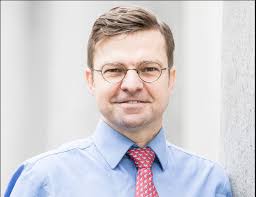
Dr Wayne Visser is the Founder and Director of Kaleidoscope Futures & CSR International, and he has authored over 40 books, including pioneering works on CSR 2.0 and sustainable business. His book Thriving is an international bestseller. He has travelled and worked in over 80 countries. He is a Visiting Professor in Corporate Responsibility at Warwick University in the UK and Senior Associate at the University of Cambridge Programme for Sustainability Leadership.