In the Kishtwar Himalayas, a Four-Year Camera Trail Reveals a Hidden Stronghold for Snow Leopard

In the high mountains of Kishtwar, in areas where the paths become narrow and villages are replaced by scree and snowfields, a series of camera traps has been quietly carrying out over a four-year period what human observers seldom are able to do: keeping an eye on one of the world’s most elusive big cats.
This month the Department of Wildlife Protection, Jammu & Kashmir, together with the Nature Conservation Foundation (NCF), published its findings, which designate the Kishtwar Himalayas as one of the most important areas for snow leopard conservation in the Greater Himalaya. The study is the first of its type in the region to provide reliable population estimates on a landscape scale, and it offers conservationists with something that they have previously been missing: a scientific baseline whereby future changes can be measured.
Counting an animal built to disappear
It is well known that snow leopards are hard to study. Because they are well camouflaged, live alone, and are thinly distributed over a large expanse of high-altitude land, they seldom show themselves even to researchers who remain in the area for years. The Kishtwar study dealt with this problem in the same way that the majority of current snow leopard research does: by using camera traps which were left in operation for months on end and which recorded everything that passed in front of them, whether during the day or at night.
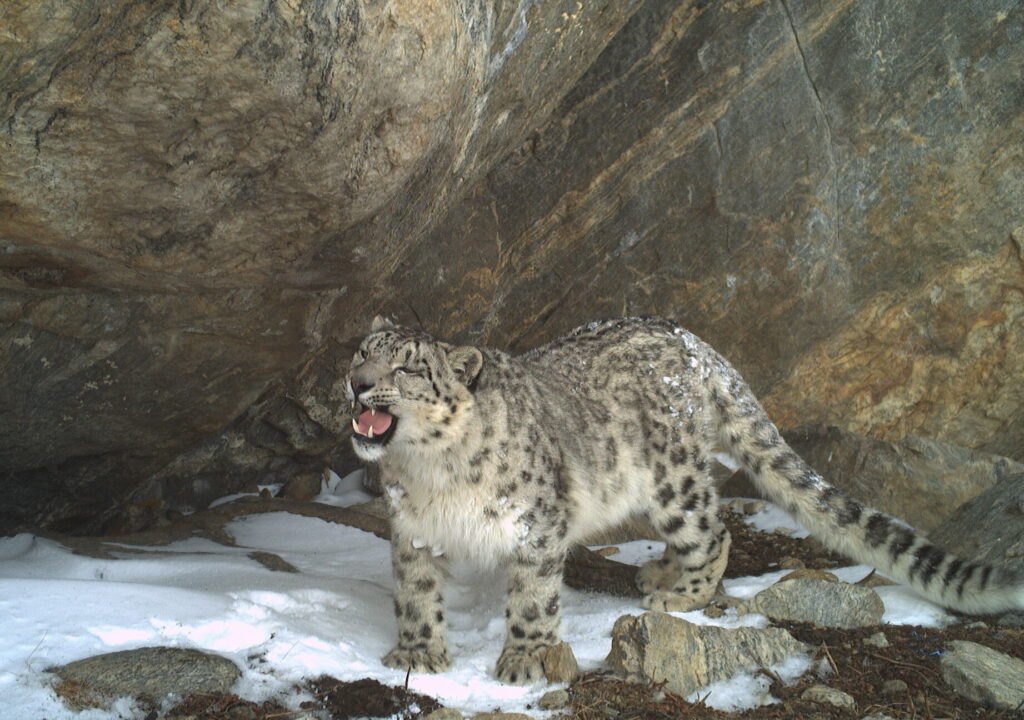
From 2022 to 2026 researchers set up 193 camera traps in six areas — Kishtwar High Altitude National Park (KHANP), Paddar, Warwan-Renai, Thajwas-Zojila, Gurez and Pir Panjal — thus creating, according to the researchers, one of the largest camera-trap datasets for snow leopards to have been gathered anywhere in the Greater Himalaya. On the basis of the images obtained, the scientists were able to identify 12 individual snow leopards by the pattern of their fur. By entering that data into Spatially Explicit Capture-Recapture (SECR) models, which are a conventional statistical technique for estimating the numbers of animals that are rarely seen in full, the researchers reached a total estimate of 21 individuals throughout the six areas.
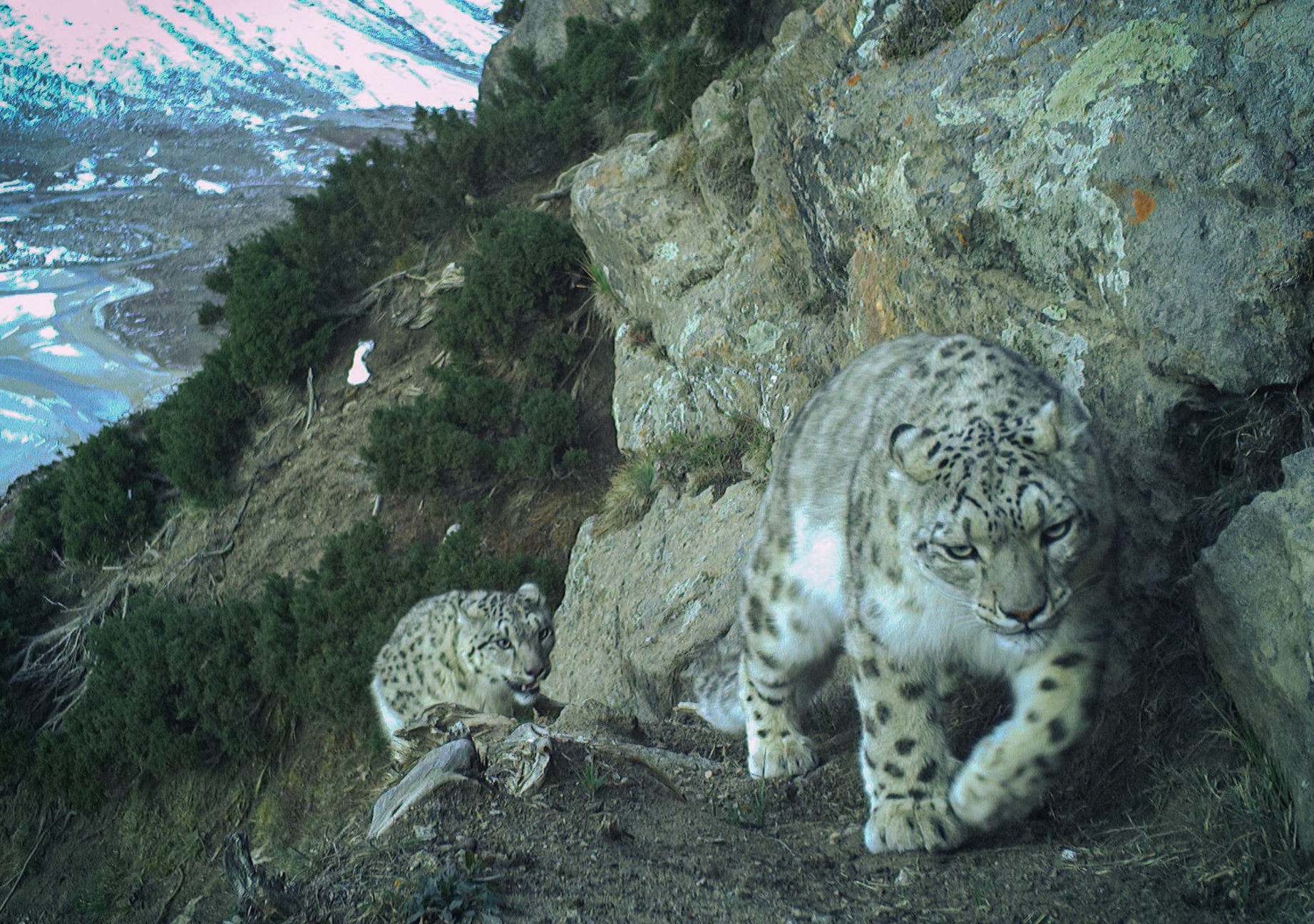
The park at the heart of the study, KHANP, provided the most clear-cut evidence. Forty-five camera stations operated over 2,700 trap nights and recorded 22 separate sightings of five cats that could be individually identified. According to the SECR model, the density was 0.35 snow leopards per 100 square kilometres, which is about eight adults in the park. A single photograph, showing a female cat travelling with a cub, confirmed something that the researchers had hoped for but had not yet been able to prove: that KHANP is not merely a place where snow leopards pass through, but one where they breed.
A wider cast of high-altitude wildlife
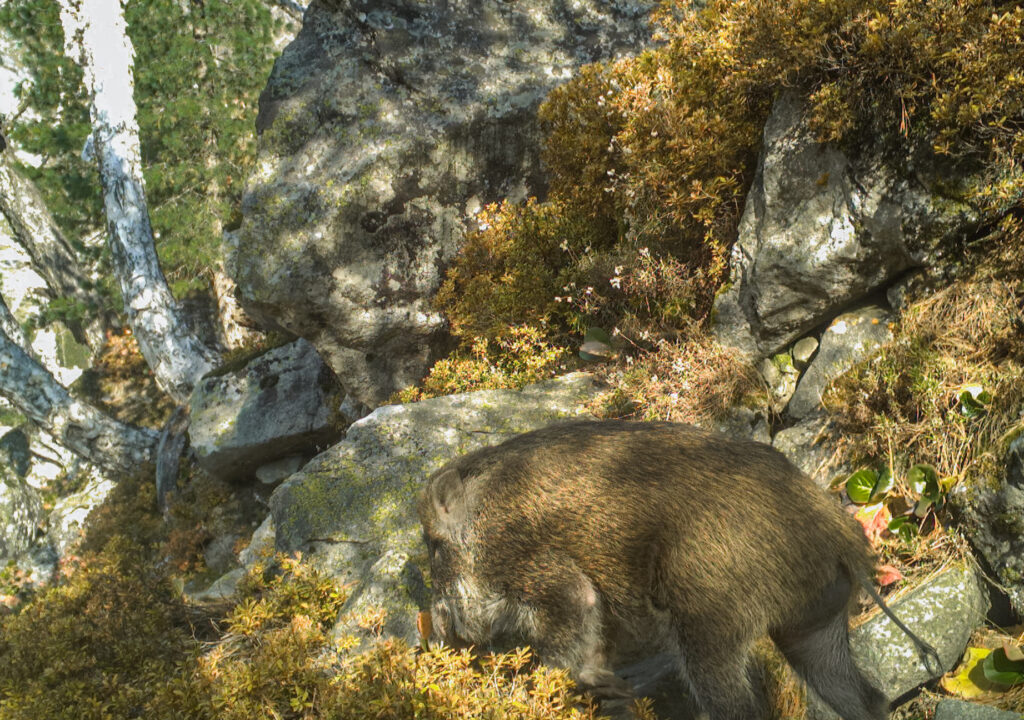
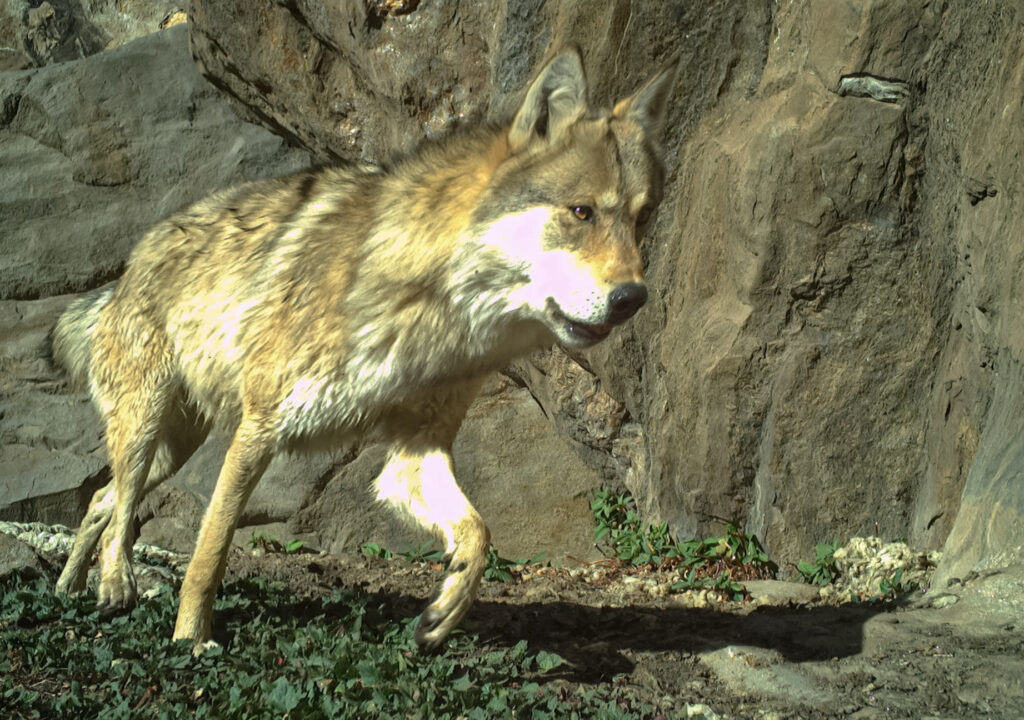
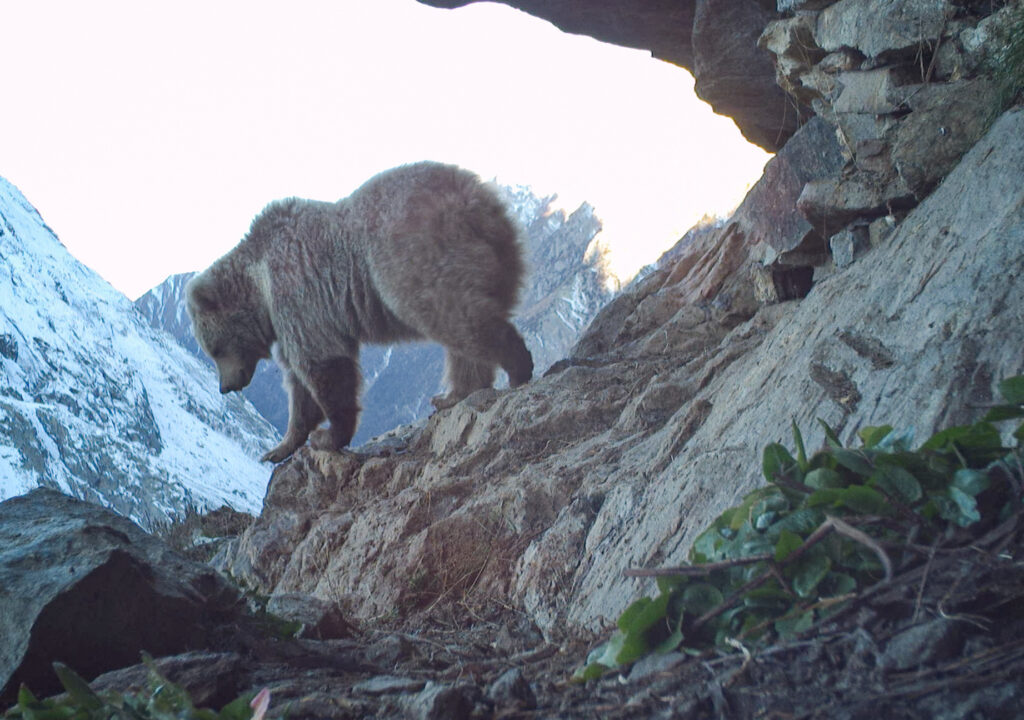
The cameras, which were aimed at snow leopards, instead recorded a much wider variety of Himalayan wildlife, including Asiatic ibex, the common leopard, the Himalayan brown and black bears, the Himalayan wolf, the Kashmir musk deer, the red fox, the leopard cat, the Kashmir grey langur, the rhesus macaque, martens and weasels. Two of the discoveries were particularly notable because of their rarity: the survey provided the first confirmed sighting of the endangered woolly flying squirrel in KHANP and the first documented case of a wild boar in the park—both of which show just how little of this area’s biodiversity has hitherto been officially recorded.
It should be noted that the on-the-ground management carried out by the wildlife warden M. S. Jamwal, together with the range officers Shafer Iqbal and Sajad Zaheer and their field staff, has played a key role in maintaining the monitoring activity in this tough terrain. Initial data collected separately for the Paddar area have shown that snow leopards are still moving through the valleys such as Hagyot, Barnaz, Machail and Darlang, together with the populations of ibex, brown bear, wolf and musk deer.
M. S. Jamwal, Warden of the Chenab Division, stated that “the Kishtwar Himalayas have become one of the most important landscapes for snow leopard conservation in the Greater Himalaya” and that “long-term scientific monitoring is assisting us in understanding where snow leopards still exist and how conservation efforts can be improved through partnerships between local communities, organisations such as the Nature Conservation Foundation, and the Department of Wildlife Protection”.
Living alongside a predator
So a great deal of the landscape in Kishtwar is not within formal protection and therefore conservation in the area cannot depend solely on wildlife surveys. The researchers also looked into human-wildlife conflict in 76 villages and discovered that livestock being damaged and crops being destroyed are continual causes of disagreement between the local people and the wildlife of the region.
As a response, the Coexistence Champions Programme for the project, under the leadership of Shahid Hameed, supported the installation of light-based deterrent systems and the creation of predator-proof summer corrals in the more vulnerable villages. The programme also provided training to local volunteers and members of the Wildlife Protection Department in the use of camera traps, wildlife monitoring and conflict mitigation – an initiative aimed at developing a monitoring capacity that will last longer than any single survey.
“Scientific evidence is at its most valuable when it changes conservation priorities,” said Dr Shahid Hameed, a wildlife researcher and conservationist who coordinates projects at the NCF and is a Coexistence Champion with the Coexistence Consortium. “The field research carried out by our team in the past few years has shown that the Kishtwar area, even though it is only partly officially protected, should be considered a priority for long-term, community-based conservation. It is a lively and actively inhabited area in which both wildlife and people share the same space, and the importance of conserving it goes well beyond its own borders. Since it is one of the very few landscapes that links up the snow leopard habitats in the western Himalayas, it is essential to protect the species and their habitats there if ecological connectivity and the long-term survival of wildlife throughout the region are to be maintained.”
What comes next
The authors of the report are careful to present these figures as merely the beginning rather than as an end. They state that ensuring the future of snow leopards in Jammu & Kashmir will require ongoing long-term monitoring, the protection of their high-altitude habitat, and continued funding of community-led conservation efforts. Since the area has for so long been ignored in scientific literature, this four-year initiative provides exactly what conservation science so often requires: a reliable initial figure against which all the other measures can be assessed.