National CSR Summit 2026 Highlights Need for Collaboration and Last-Mile Impact

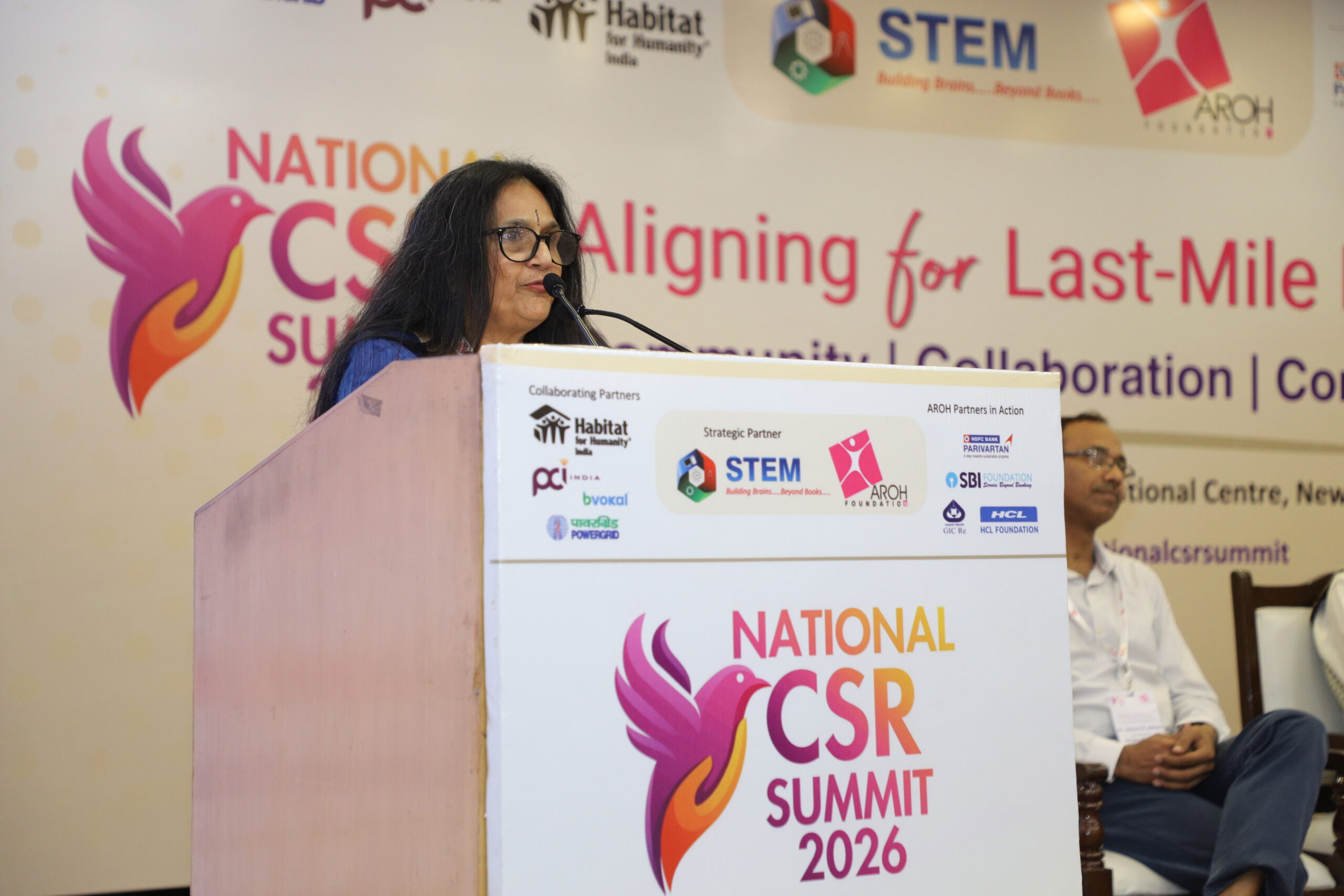
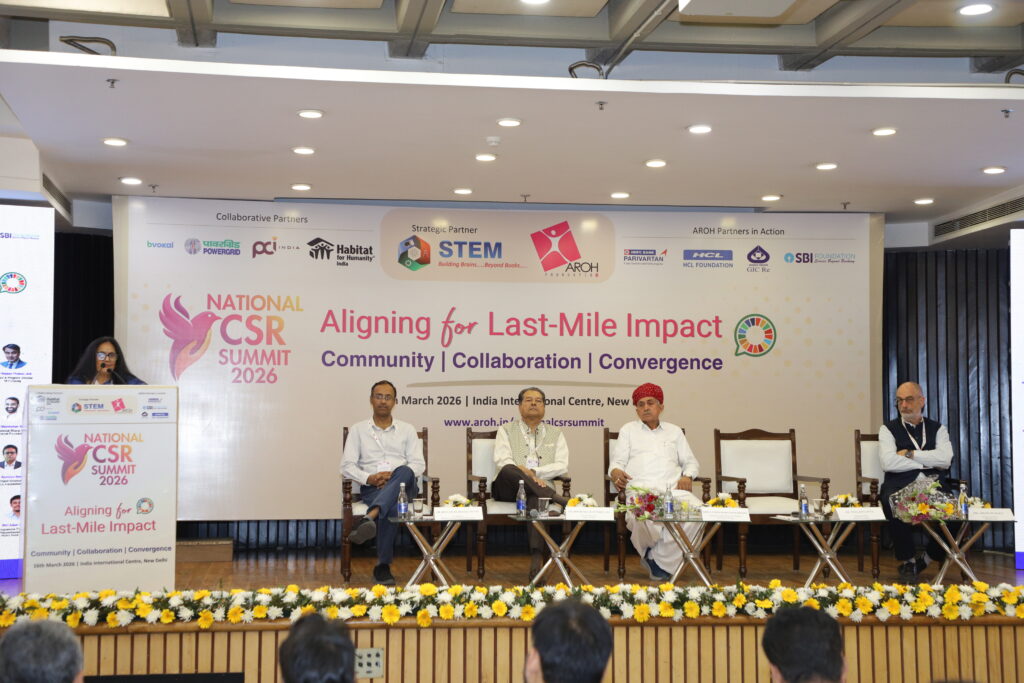
The National CSR Summit 2026, organised by the AROH Foundation at the India International Centre, brought together policymakers, corporate leaders, and development practitioners to discuss how CSR can support inclusive growth in India.
Held under the theme “Aligning for Last-Mile Impact: Community, Collaboration, Convergence,” the focus was on building stronger partnerships to solve challenges in underserved regions, especially aspirational districts and tribal areas.
The summit was inaugurated by Lumba Ram Choudhary, who spoke about the importance of corporate participation in national development. Speakers also highlighted how CSR needs to move beyond compliance and become a more strategic tool in building Viksit Bharat.
Moving Beyond Infrastructure: Focus on Quality
One key takeaway was the need to move from infrastructure-heavy CSR to focusing on quality.
Ms. A. Srija, Economic Adviser, Ministry of Education pointed out that while physical infrastructure gets a lot of attention, sectors like education and healthcare need long-term effort. She stressed that building schools is not enough, there also needs to be focus on learning outcomes, teacher training, and access to better resources.
She also mentioned the Vidyanjali Portal as a good example of how communities and private players can work together to support government schools.
Sustainability Over Short-Term Projects
Bibhuti Ranjan Pradhan from Indian Oil Corporation Limited spoke about the need for CSR projects to be self-sustaining.
He encouraged NGOs to design initiatives that can continue even after funding ends, focusing more on long-term systems rather than short-term impact.
Addressing Urban Health and Nutrition Gaps
Health and nutrition were highlighted as key areas, especially in urban slums.
Manisha Cabra noted that even where healthcare infrastructure exists, it is often underused due to low awareness and weak community engagement. She also pointed out that urban areas often lack self-help groups, which play an important role in spreading awareness.
Ajay Khera from EngenderHealth added that urban slums are often overlooked and need more attention in both CSR and public health efforts.
Nutrition Crisis and Changing Food Systems
Marie-Claude Desilets from UNICEF India spoke about India’s “triple burden of malnutrition”undernutrition, lack of key nutrients, and rising obesity.
She shared that:
-Nearly one-third of children under five are stunted
-Almost 50% of adolescent girls are anaemic
She also highlighted the rapid growth of ultra-processed foods and said that solving this issue will need better policies, healthier food environments, and more awareness, especially among young people.
Technology and Inclusion in Healthcare
The summit also discussed how technology can improve healthcare access. One example was the use of digital tools to track vaccinations among nomadic groups like the Banjara community, helping ensure they don’t miss immunisation.
The Way Forward: Collaboration for Last-Mile Impact
Across sessions, one thing was clear, CSR needs to become more collaborative and scalable.
-Speakers spoke about the need for:
-Better alignment with national priorities
-Community-led approaches
-Long-term sustainability
-Better use of existing systems
Dr. Neelam Gupta from AROH Foundation said the goal is to build partnerships that can scale impact across the country.
Conclusion
The summit made it clear that the future of CSR in India lies in simple but strong ideas, working together, focusing on communities, and creating long-term impact, especially at the last mile.