Nepal Floods: Scientists Confirm Climate Change Drove Deadly Himalayan Glacier Collapse

Langtang Lirung let go of a piece of itself on the morning of August 26.
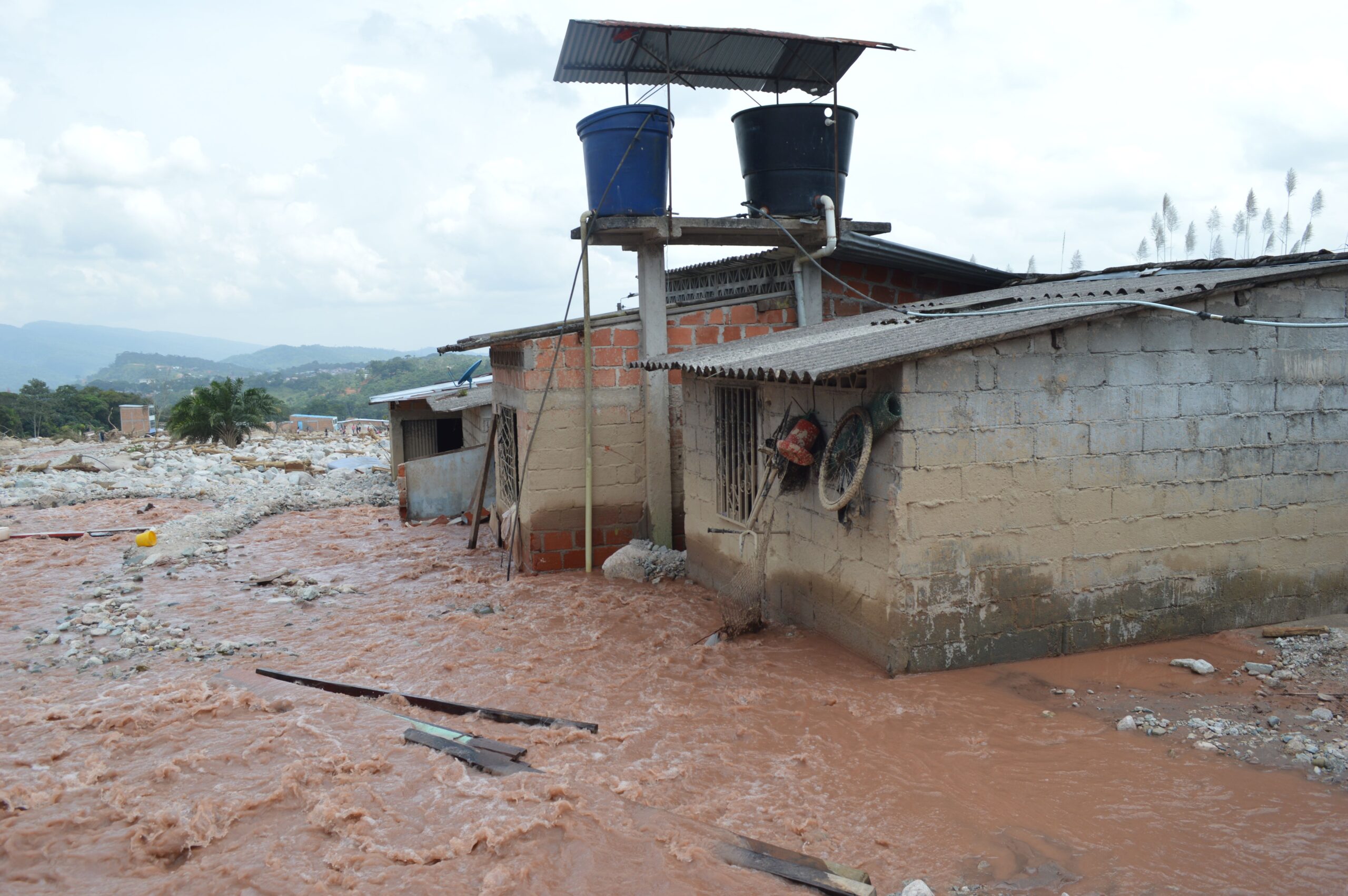
Not a boulder. Not some block of ice. A whole section of rock and glacier came off the mountain and went down the valley as a moving slurry of water, ice and stone. Villages were in the way. So were roads, bridges and hydropower plants. By the time it stopped, settlements on both sides of the Nepal–Tibet border had been either rearranged or removed from the map.
Almost a month has passed since then, and yet nobody can still give you a final number. The two countries together count 1,446 dead and more than 6,669 missing. Nepal has recovered 1,403 bodies. It has been able to identify only 105 of them. The scale of the loss is immense but in Nepal and Tibet, the contours of such a disaster are grimly familiar.
So what happened?
The World Weather Attribution team published its findings this week. The answer isn’t the one anyone was hoping for, because there’s no one person or event to blame.
There was no single storm here. No freak downpour. No super villain with a name and a date you could point to. What the researchers found instead was more like a slow pile-up — global warming, shrinking glaciers, thawing permafrost, shaky ground underneath it all. Each piece making the next one worse, year after year, until the mountain just couldn’t hold on anymore. They call it a compound crisis. You can call it a slope that finally ran out of reasons to stay put.
The mechanism itself is almost insultingly simple.
High on the Himalaya there is a line above which things stay frozen. Global Warming has been shoving that line up the mountain. Ice and permafrost that used to sit safely under it now spend more of the year thawing. And permafrost is not just cold mud on the surface — it runs deep into the bedrock and works like glue. Warm the glue. See what happens.
Walter Immerzeel, a mountain hydrologist at Utrecht University and one of the study’s authors, doesn’t dress it up. The changes underway, he says, are fundamental and irreversible — not something that corrects itself once a few cooler years roll around. Glaciers are pulling back for good. Permafrost is rotting from the inside. Put simply, the mountains are becoming less trustworthy.
Two more things sharpened the edge. July and August were the warmest on local record, running about 5 degrees Celsius above normal — which is not weather, that is a different climate wearing weather’s clothes. And late 2025 brought unusually heavy snow, so there was extra meltwater on hand right when the heat showed up. Nature does like to prepare in advance.
There is one more suspect, and the scientists handle it with tongs: the magnitude 7.8 earthquake that hit Nepal in 2015 may have cracked the slope years before it failed. How much it mattered, nobody can say.
The part that stings
Nepal has about 30 million people. It is mostly rural. Its share of global greenhouse gas emissions is a rounding error next to the industrialised world’s.
Its reconstruction bill is estimated at $4.78 billion.
That arithmetic is why the story moved from rescue to politics in roughly a week. Friederike Otto, a climate scientist at Imperial College London, told reporters there is no doubt climate change is one of the drivers — which drops the disaster squarely into the loss and damage file. That is the long-running debate over whether rich, high-emitting countries owe money to poor, low-emitting ones when the consequences arrive. It has been running for decades. It has produced a great many headlines.
Prime Minister Balendra Shah will raise it at the UN General Assembly next week, his first foreign trip as Nepal’s leader. India has offered something more immediate: 654 megawatts of electricity a day to replace what the water took.
The title nobody wants to read twice
The paper’s name runs long enough to lose you halfway. Skip most of it. Three words matter: Beyond Adaptation Limits.
“Adaptation” is the comfort word of climate policy. It appears in every panel discussion, generally just before the coffee break. Build the seawall. Move the village. Install the early warning system. Everyone nods, because the crisis has been successfully downgraded into a project plan.
The scientists are pointing out, politely, that parts of the high Himalaya have walked straight past that word.
Think about what an early warning offers here. A siren. Possibly a text message. Very thoughtful. Completely beside the point once the mountain has stopped holding itself together. You can’t rtalk back a slope into stability with an alert and imaginative policies.
Or try the wall. You would need to shield an entire valley from millions of tonnes of rock and ice travelling at highway speed. Engineers build remarkable things. But that is not one of them.
And the real trouble is higher than any of it. The freezing line keeps climbing, and it takes the safety margin with it. Nothing poured in concrete at the bottom of the valley brings that back down.
So here is the quiet horror inside all the careful academic phrasing. “The Himalaya is dangerous” — is hardly the discovery here, people who have been living there have known that for centuries. The new part is that it is dangerous in a way our silly little human summits cannot fix. The checklist has run out of items.
The families digging their homes out of the mud in Nuwakot worked that out weeks ago.
Climate change is going to keep stacking the odds against places like this. Nobody gets to opt out of that. So maybe stop waiting for the next disaster to say the obvious thing out loud: build smarter, warn people better, and take the emissions seriously.
This isn’t Nepal’s problem to solve alone, and treating it that way is how we get here again.