Can Miyawaki Forests Help Restore Greenery to Delhi NCR?
In many Indian metropolises, the maintenance and expansion of green cover is a complex problem, located at the meeting point of development and ecology. Urban planning authorities have the responsibility of taking measures to keep greenery visible and ecologically viable. However, we continue to witness the further fragmentation of old growth forests, the disappearance of native species, and the barrenness of large tracts of land within conurbations like Delhi NCR. As a metropolis grows, trees and green spaces should not be reduced to islands amidst concrete and steel.
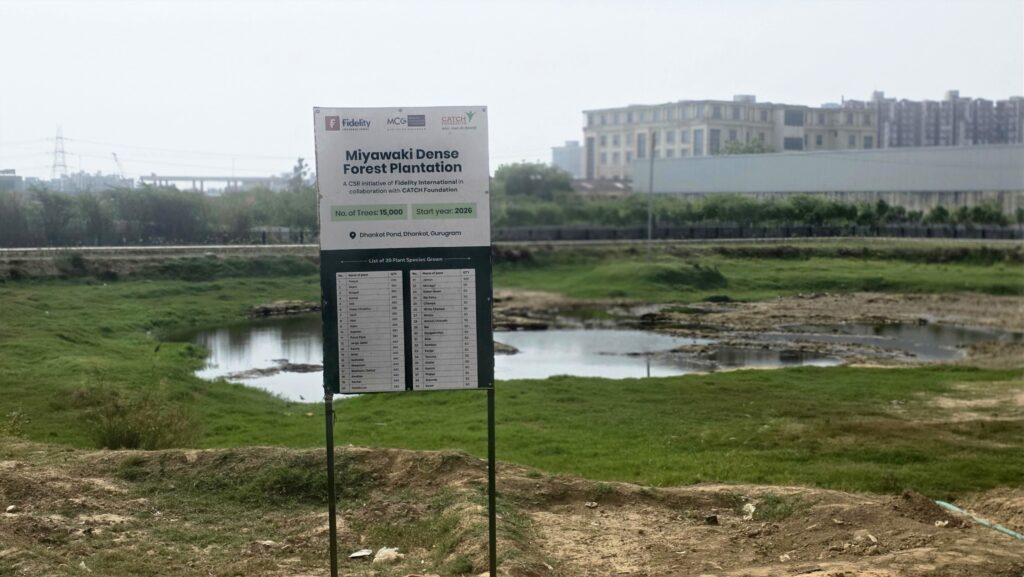
It is to address this particular aspect of expanding Indian supercities that Fidelity International has announced the creation of a high density Miyawaki forest, with the plantation of 15,000 saplings of over 30 native tree species across 11,873 square metres at the Dhankot pond area in Gurugram. Their implementation partner in this project is the Creating Awareness To Change Habits (CATCH) Foundation. This forest was inaugurated on 1 May by Rohit Jetly, Head of Records Keeping Platforms and India Site Head, Fidelity International Ltd (FIL), and Stuart Warner, Head of FIL Platforms. In the next three years, the designated area will be developed by FIL and the CATCH Foundation into a self-sustaining urban forest composed of native species of plants.
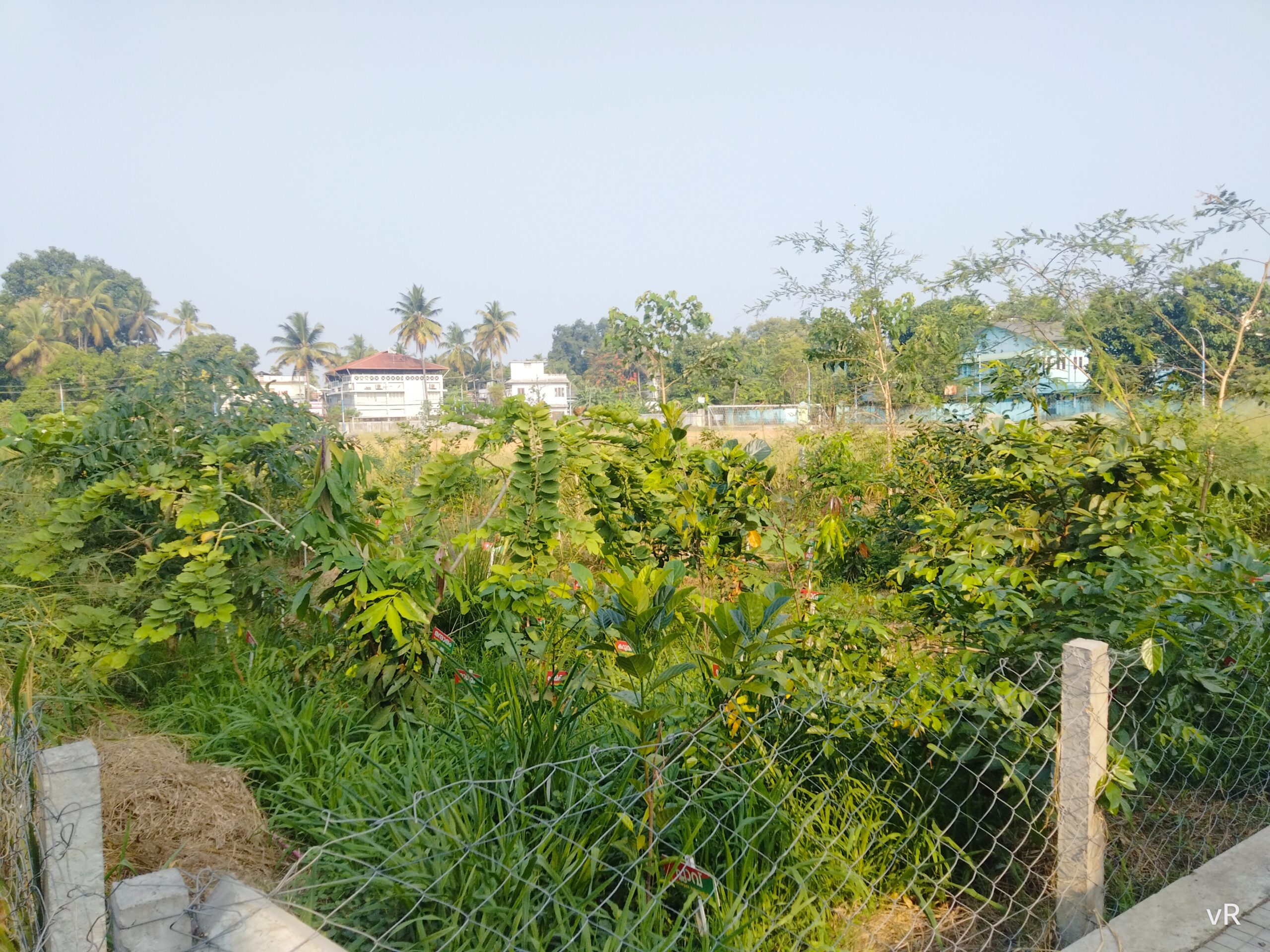
But what is a Miyawaki forest? Conceived and created by the Japanese botanist Akira Miyawaki, these forests are reforestation projects consisting of native trees that are planted on degraded soil. They utilise pioneer species of plants to restore fertility to soil that has been depleted of humus and nutrients. These must be indigenous botanical species, which are threatened by both development and invasive non-native species. The plants are classed into four categories: main tree species, sub-species, shrubs, and ground-level herbs. Miyawaki conceived of them as suitable for urban or suburban areas impacted by deforestation, urban expansion, and pollution. He would eventually work with Japanese companies to plant and grow his forests on their land (Japanese law required industrial companies to plant and tend green areas). There has thus been a historical connection between CSR and Miyawaki forests.
Thousands of “pocket forests” have been grown in Japan using this method. Outside Japan, India has the most such forests. Municipal corporations, schools, resident associations, NGOs, and private companies have been responsible for reforestation programmes using Miyawaki methods. A few Miyawaki forests have also been developed in areas of Delhi NCR. There has been evidence gathered through such programmes that these forests have positive effects such as accumulation of carbon dioxide, heat reduction, and increased biodiversity. However, their sustainability remains in question: after the third year, the crowding of trees within a small area causes a drop in survival rates to 45%. Being composed of new growth trees, they cannot sequester enough carbon compared to old-growth forests. The urban complexity and pollution levels of Delhi NCR are major ecological challenges. A CSR project that undertakes to raise a Miyawaki forest must have a clear picture of what tangible changes it can bring about on the ground.
Accordingly, Fidelity International envisions their Miyawaki forest project as a long-term effort at ecosystem revival. Along with the CATCH Foundation, it has committed to three years of structured maintenance—including watering through a precision drip irrigation system, mulching, organic soil care, and sapling replacement—to ensure over 95% survival of trees. Geo tagging, monthly monitoring and third-party audits will track impact and growth; these actions will, in time, track the growth of the forest from plantation to impact.
The support of the community is crucial to the success of a reforestation project such as this one. To integrate community involvement with their project, FIL will organise employee- and family-led plantation drives, structured forest maintenance days, and an Adopt a Tree initiative. Ameet Nayak, Head of India Legal & APAC Company Secretary, and India CSR Head, Fidelity International said, “This Miyawaki forest reflects our belief that meaningful environmental action must be rooted in local communities and designed to deliver lasting value. By restoring green cover and strengthening ecosystems, the forest will enhance environmental resilience while improving wellbeing and quality of life. At Fidelity International, our CSR approach is centred on purposeful action and strong partnerships that translate intent into tangible, on ground impact.”
What is the targeted impact of this planned Miyawaki forest? Accelerated growth of native trees under the application of the Miyawaki method will establish natural canopy cover, leaf litter, and native root systems, and so create a habitat for native species of birds, insects, and other fauna in a region where such habitats have been diminished by urban growth. FIL claims that as the forest matures, it will absorb 250 to 280 tonnes of carbon dioxide annually and provide an annual groundwater recharge of 5-15% and localized cooling of 2-3° Celsius. Over the next ten years, the forest is projected to become fully self-sustaining and sequester a cumulative 142 to 458 tonnes of carbon dioxide-equivalent greenhouse gases.
This decade has witnessed unprecedented environmental extremes. Ecology-centric projects will need to be more resistant and sustainable in the face of such extremes. Many of them, like this Miyawaki forest, will be founded on CSR, as they have been before; standards for assessing these projects are also evolving. Can a pocket forest actually provide useful carbon sequestration in a dense 21st century metropolitan region? How should corporate entities and CSR professionals coordinate their work towards environmentally-aware objectives? Only time and careful impact assessment will tell if there is, in Fidelity International’s project, an effective, sustainable model of urban ecology for Delhi NCR and other similar urban areas in India.